
Get started
Coachmarks Onboarding
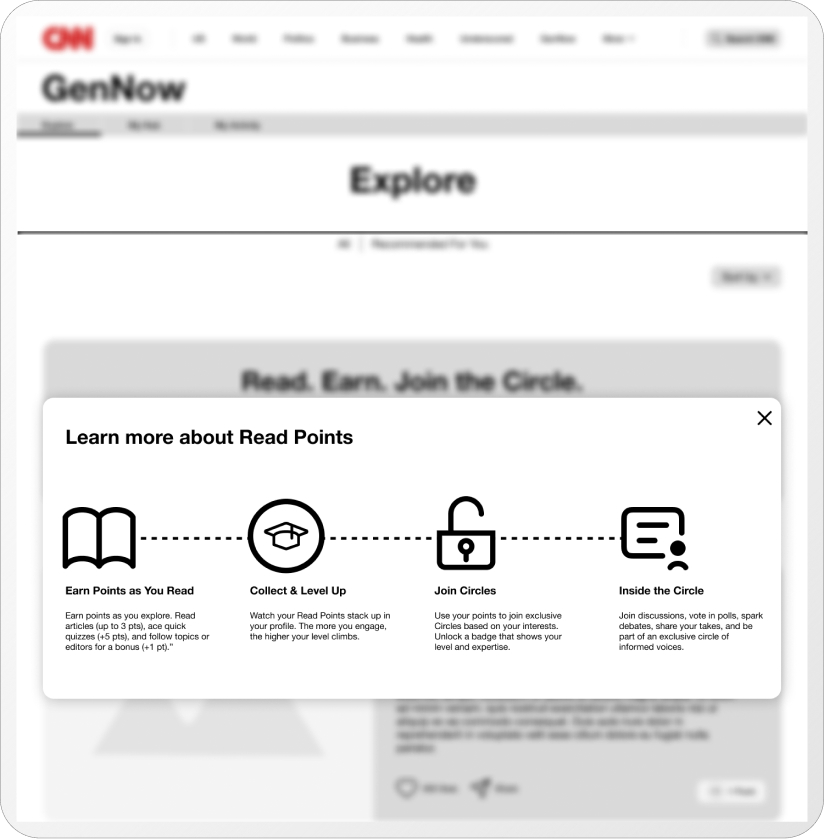
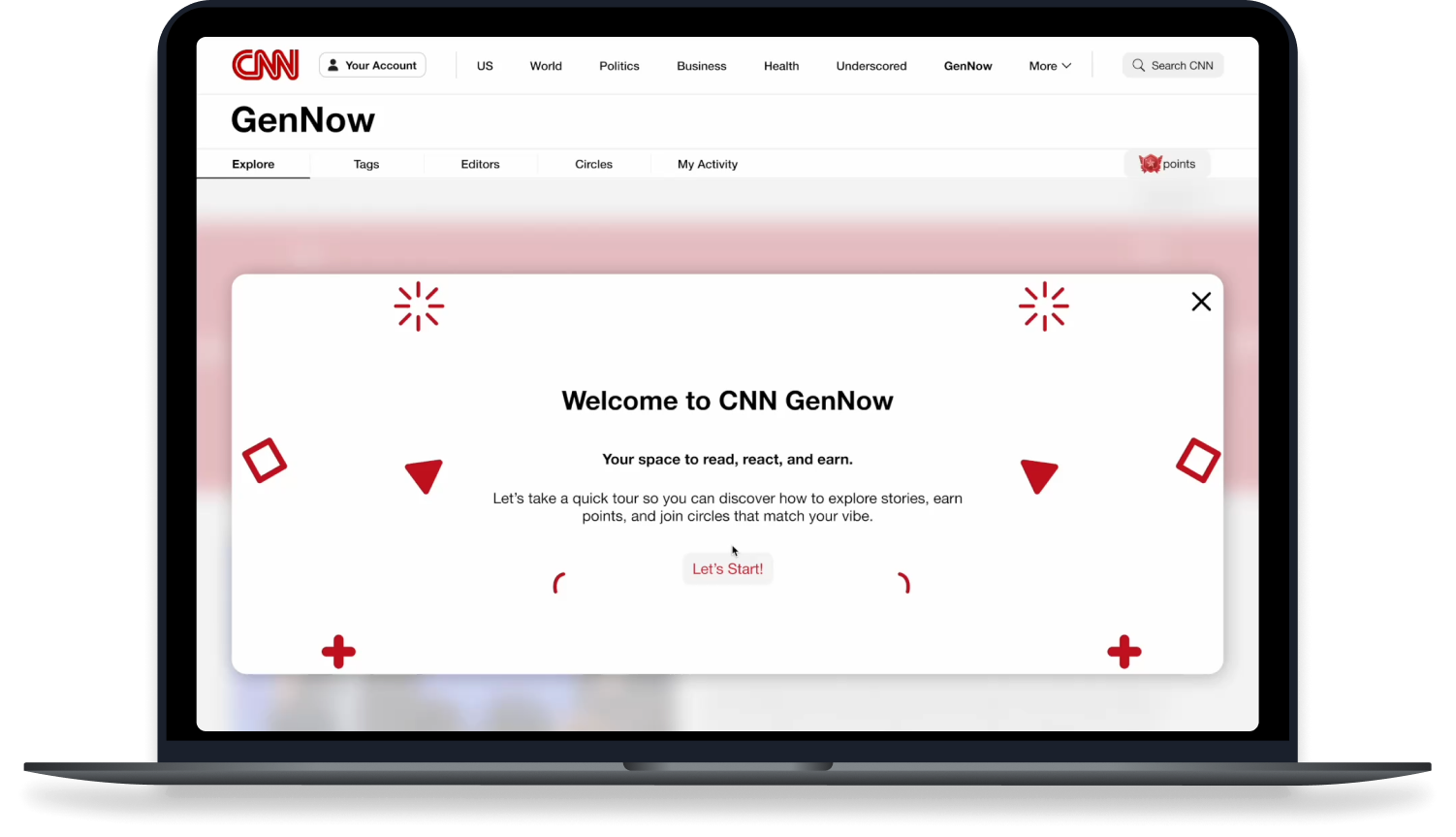
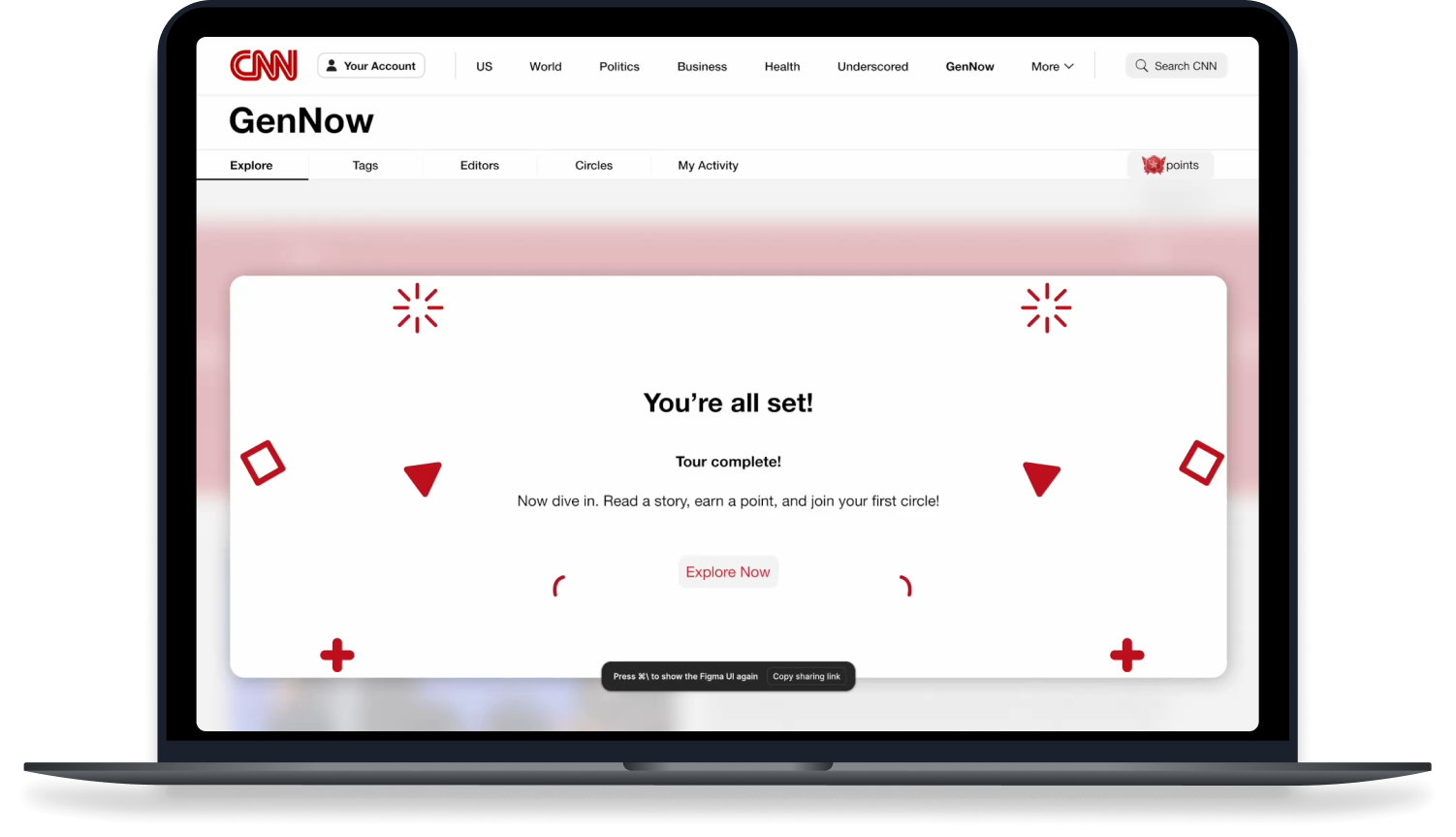
A quick guided tour shows how GenNow’s points work and how to interact with everything on the page.
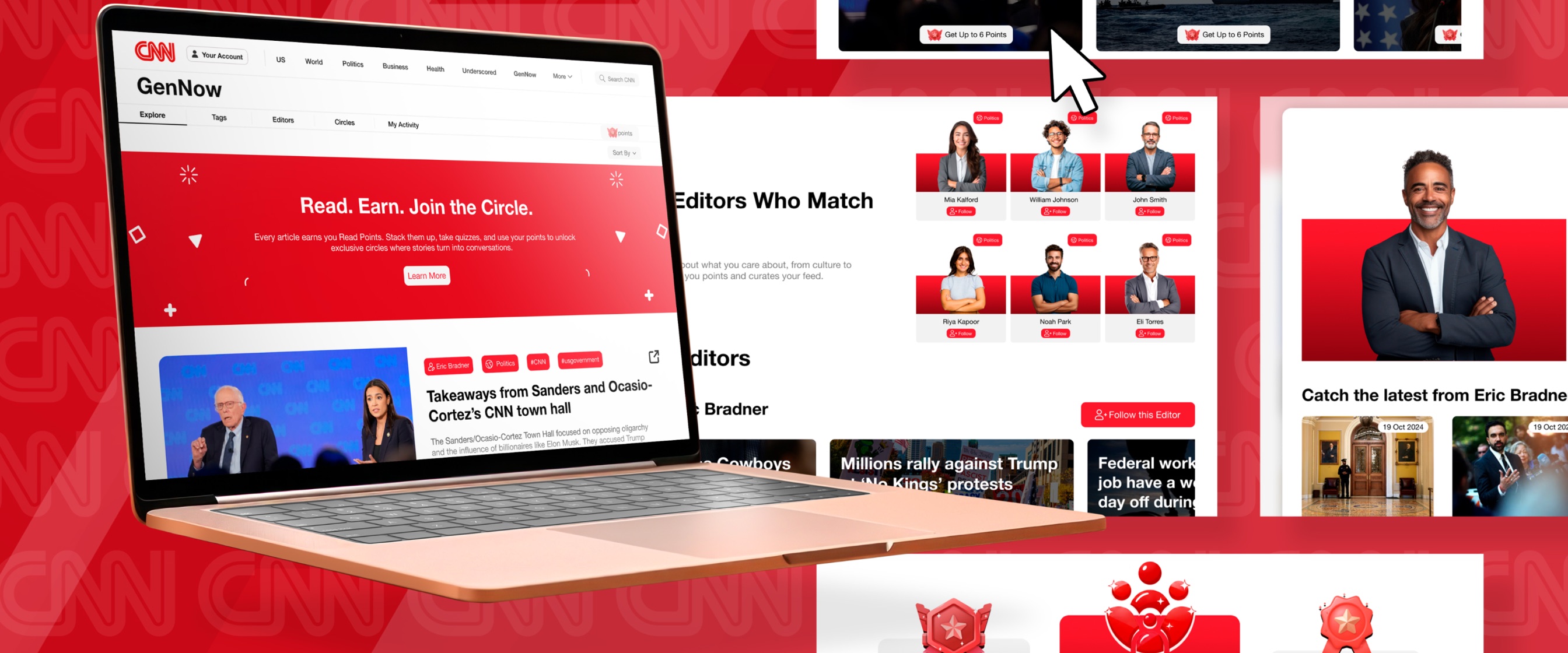
01 · Context
As Gen Z rewrites the rules of news consumption, CNN must evolve from a traditional publisher into an experience that matches their pace, preferences, and digital habits.
Gen Z increasingly gets news through algorithms, creators, and short-form video. They prioritize immediacy, selective trust, and visually driven storytelling, widening the gap between traditional news sites and how this generation actually stays informed.
CNN risks losing relevance with Gen Z and future audiences unless it delivers a web experience that fits their tastes and habits. It has seen a 50% revenue loss over the past two years, as 71% of Gen Z and Millennials now get their news from social media.
02 · Overview
Problem
CNN feels overwhelming, static, and out of step with how Gen Z consumes news, so younger readers struggle to find relevant stories or build a news habit.
Solution
GenNow: a clearer, personalized, and interactive CNN built around Gen Z behavior, easier to navigate, more engaging to explore, and rewarding to come back to.
Impact
Won a European Design Award, with a gamified news hub shaped by 20 interviews and tested with Gen Z readers.
Winner of a European Design Award.
03 · The Product
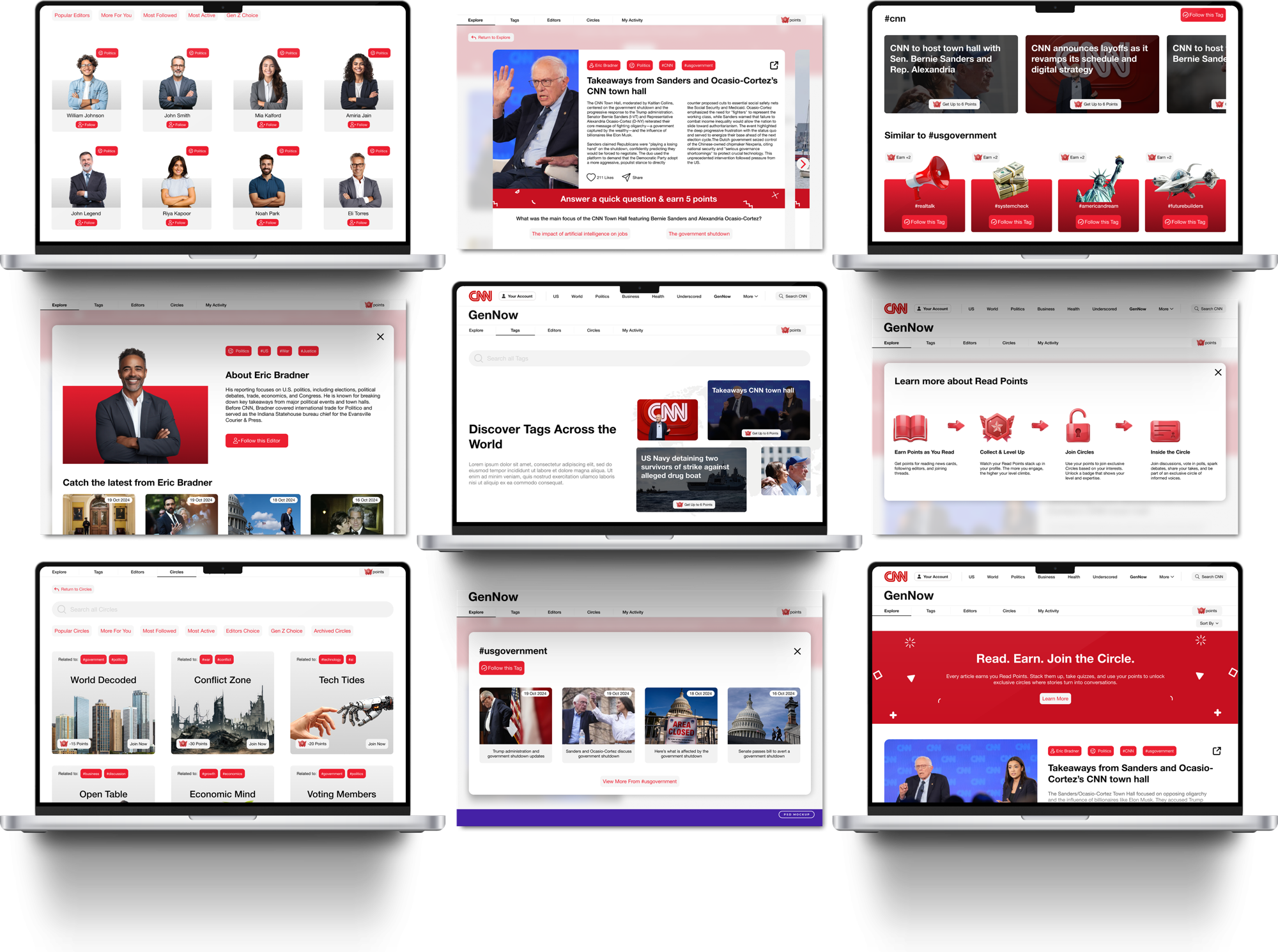
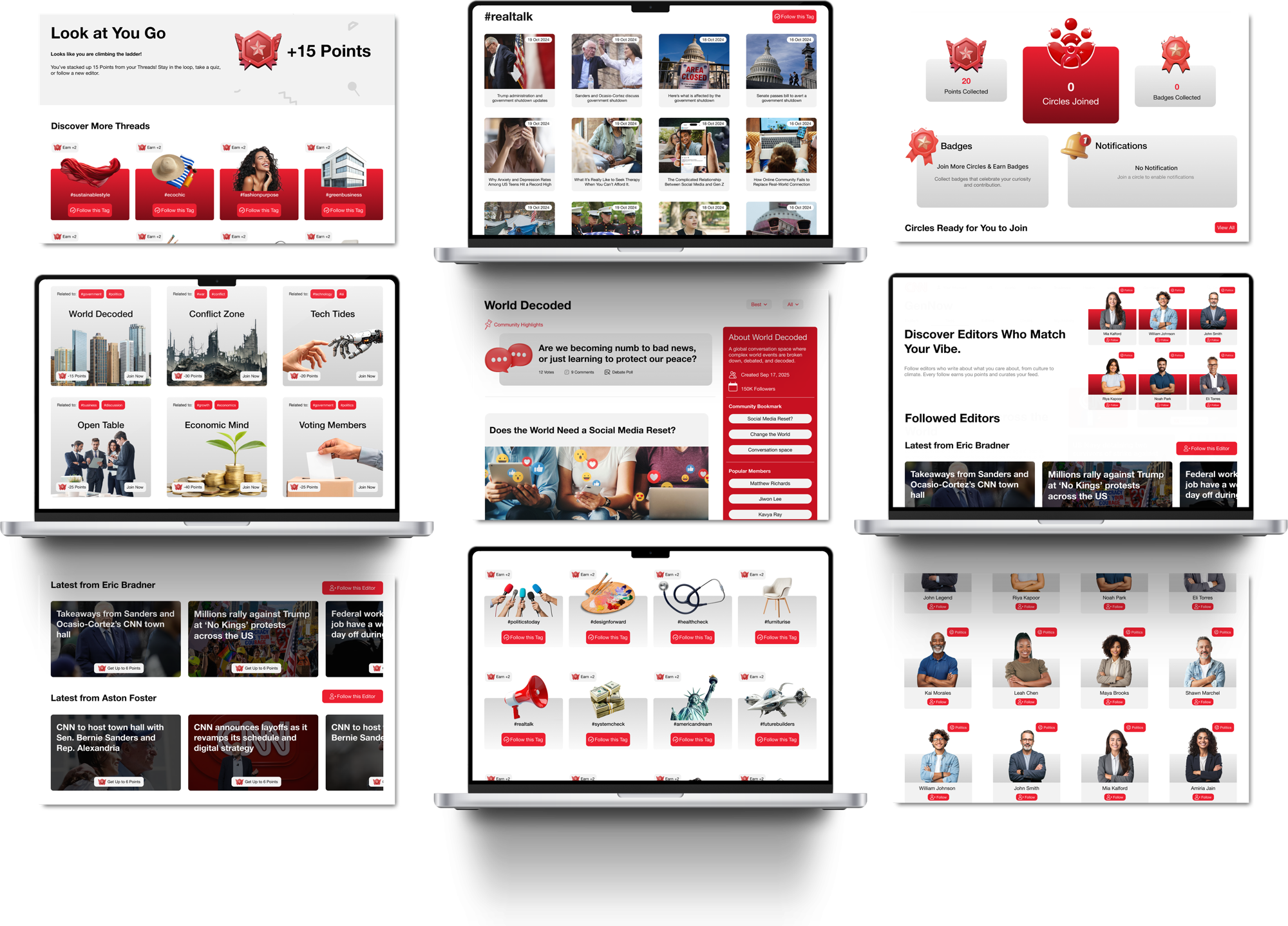
Get started
A quick guided tour shows how GenNow’s points work and how to interact with everything on the page.
Read faster
Swipe through bite-sized story cards that summarize key articles, designed for quick, meaningful browsing.
+5 for every quiz answered right · +1 for every like or share
Follow what matters
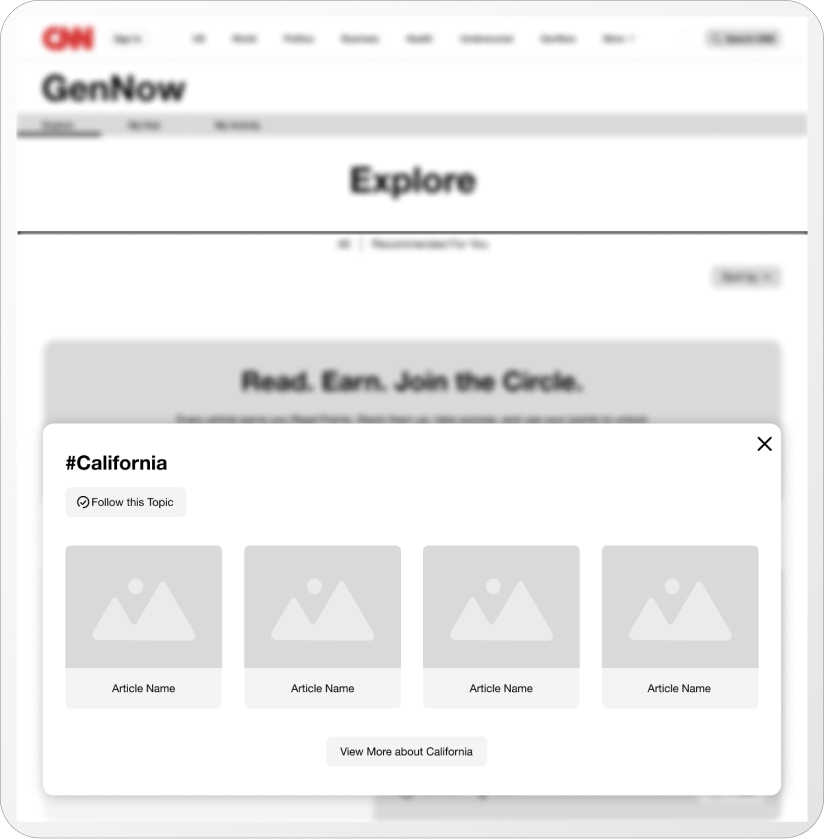
Track developing stories or trending conversations that interest you.
+2 points for each tag you follow
Find your voices
Discover and follow youth editors whose takes resonate with you. Curated threads keep your feed fresh.
+2 points for each editor you follow
Belong
Exclusive, topic-based communities to discuss ideas and share opinions, unlocked with the points you earn.
Spend 15 points to join a circle
Track your progress
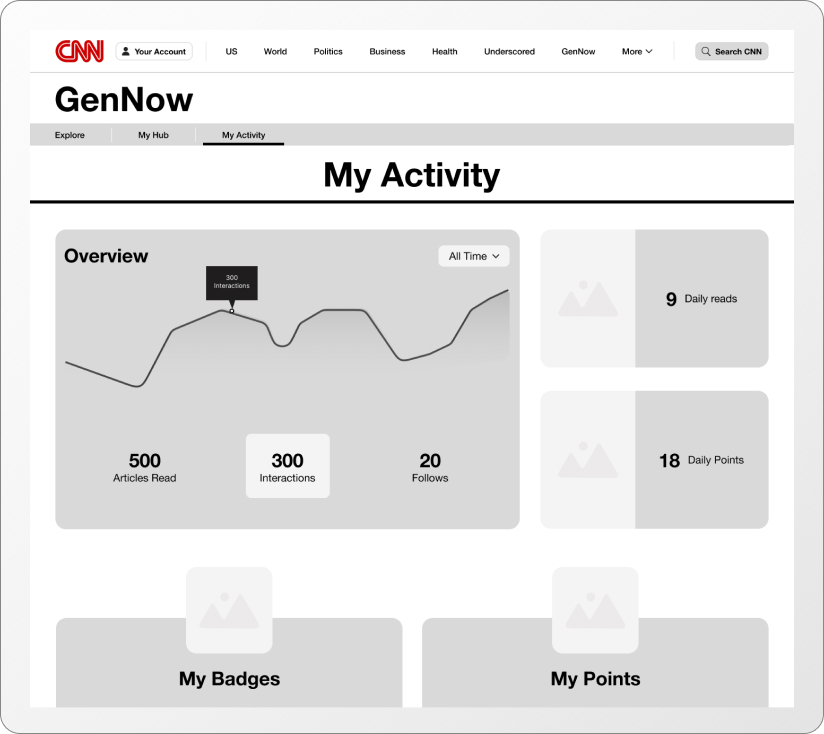
Points, badges, and the tags and editors you follow, all in one place.
04 · Research Highlights
Insight
100%
of the people we interviewed rely on social media as their main way into the news.

Persona
Maya Johnson, the efficient curator
“I usually only dive deeper if a story interests me. I want something scannable at first.”
Skims headlines on TikTok, Instagram and X, then verifies on trusted sources.
Key insights that informed my design decisions
The homepage feels dense and text-heavy, overwhelming readers used to visual storytelling.
Content isn’t tailored to readers’ interests or browsing behavior.
Readers want two-way engagement, where interacting with content earns them value.
Gen Z prefers short, snackable formats that blend credibility with approachability.
Key takeaway
News has to meet Gen Z where they already are: scannable, personal, and worth coming back to.
05 · From Insight to Feature
01
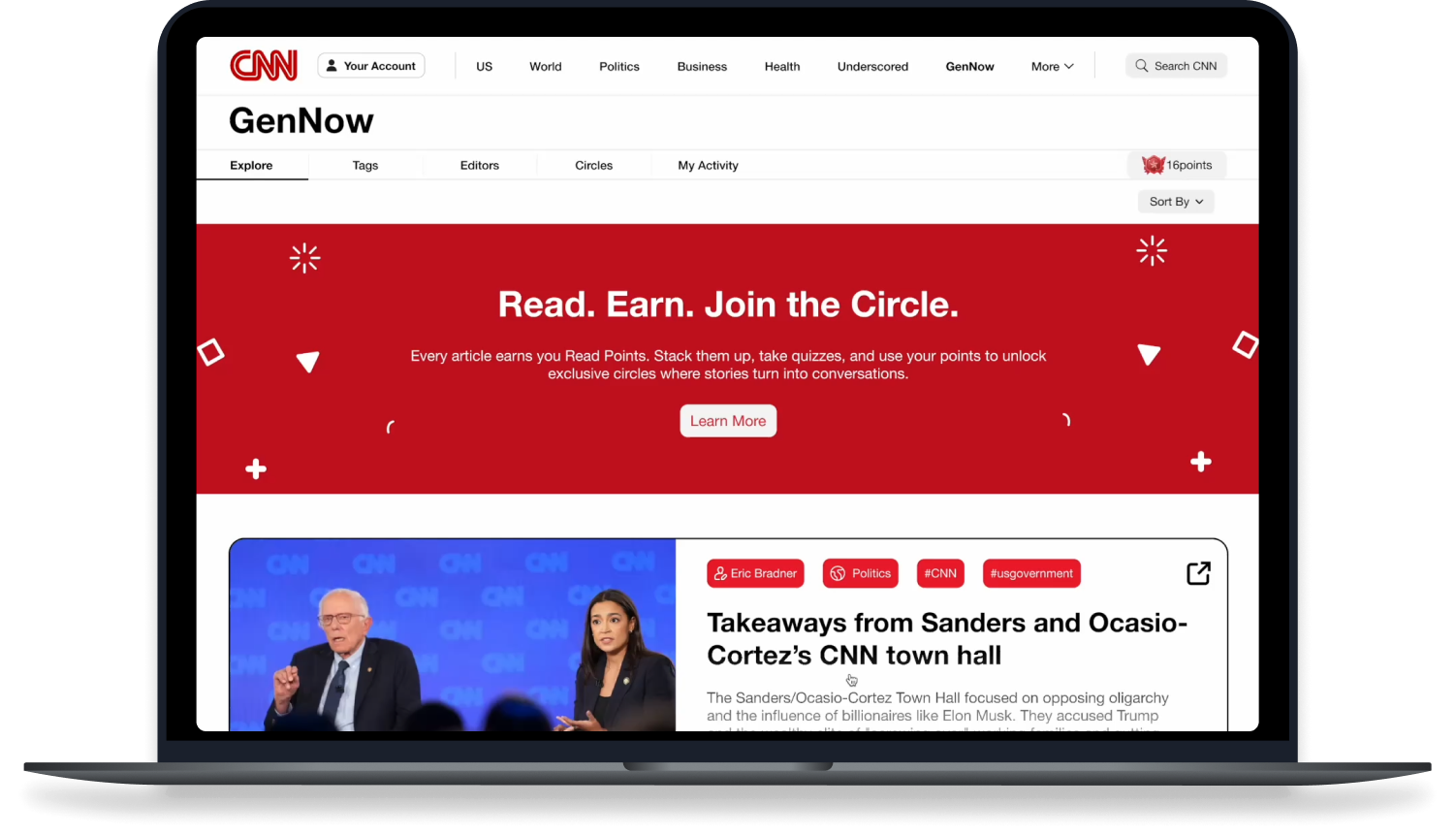
How might we make dense news quick to scan?
Explore with news cards
02
How might we tailor the feed to each reader’s interests?
Follow tags + editors
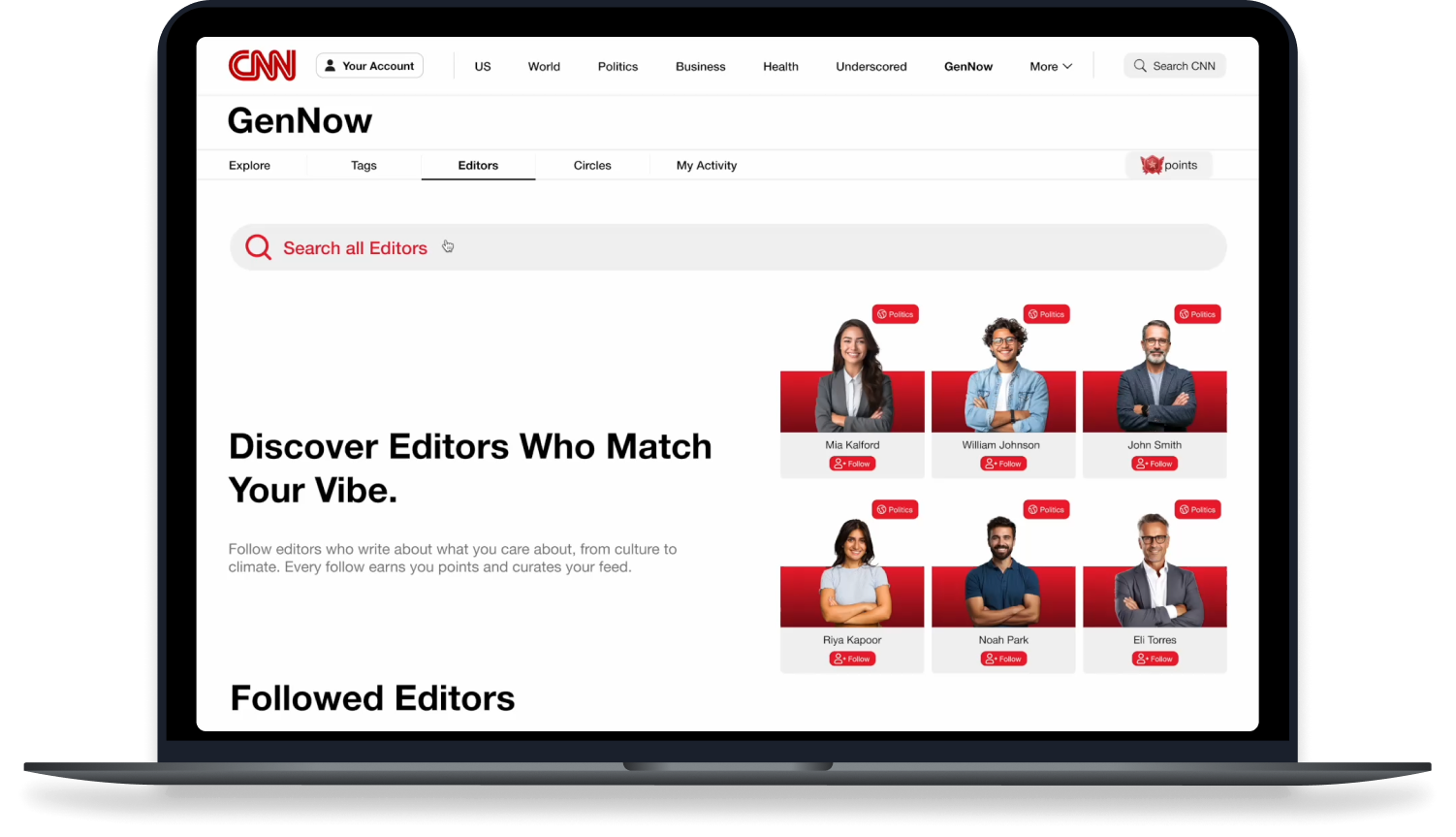
03
How might we reward readers for engaging, not just scrolling?
Read points + circles
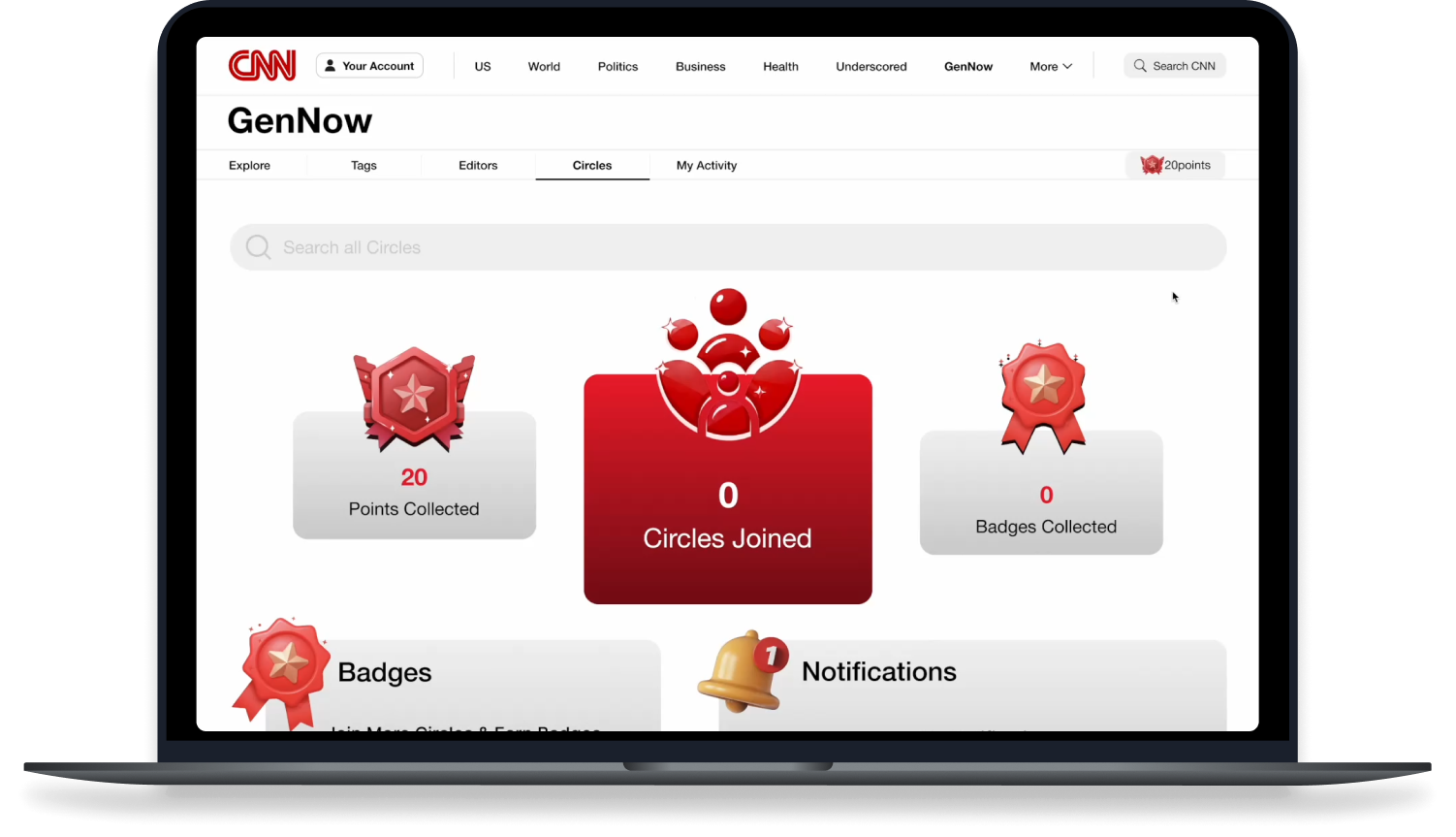
06 · Testing & Iteration
01
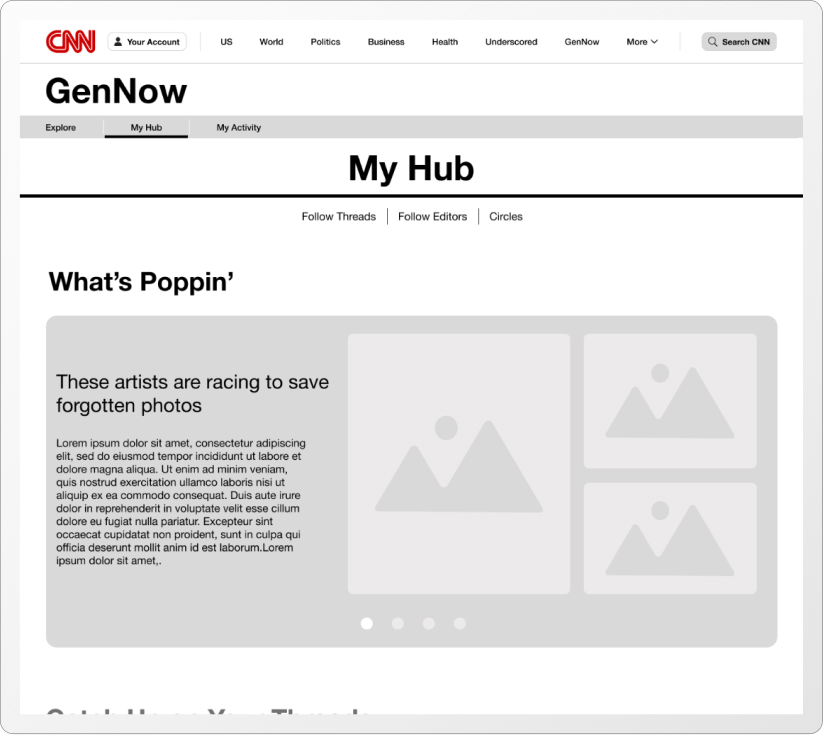
First layouts for GenNow, borrowing from CNN and the social feeds Gen Z already uses.
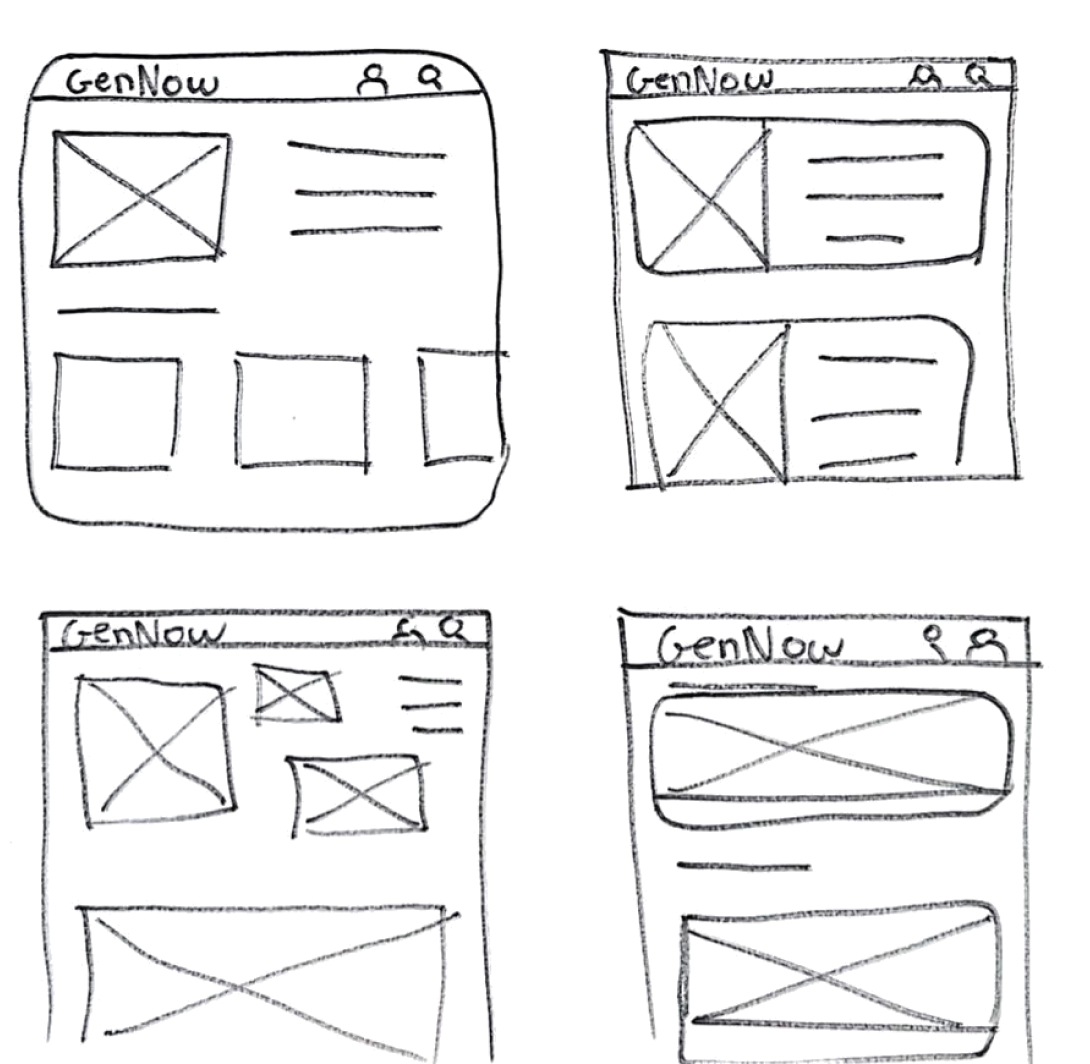
02
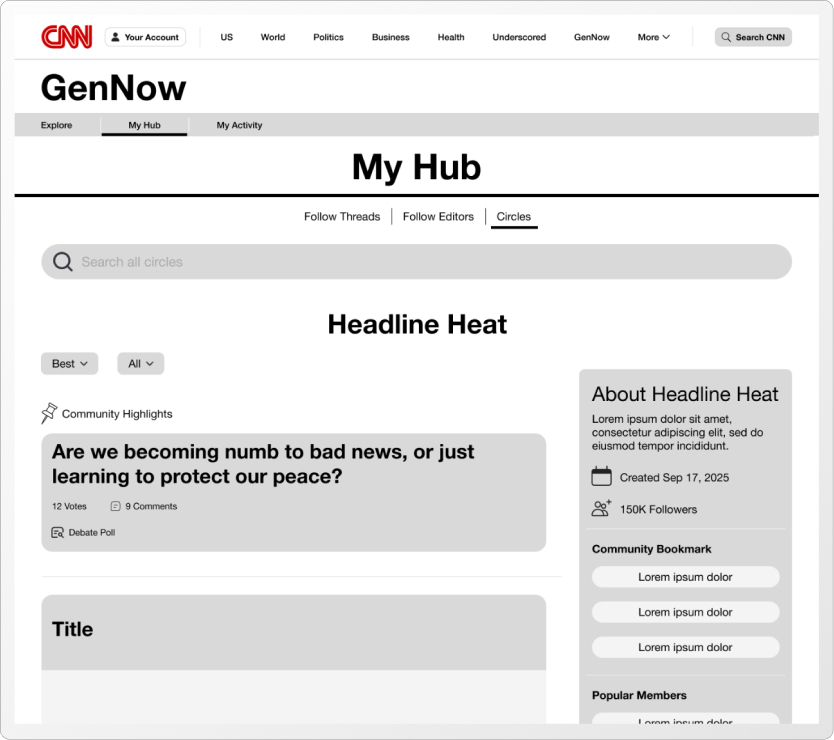
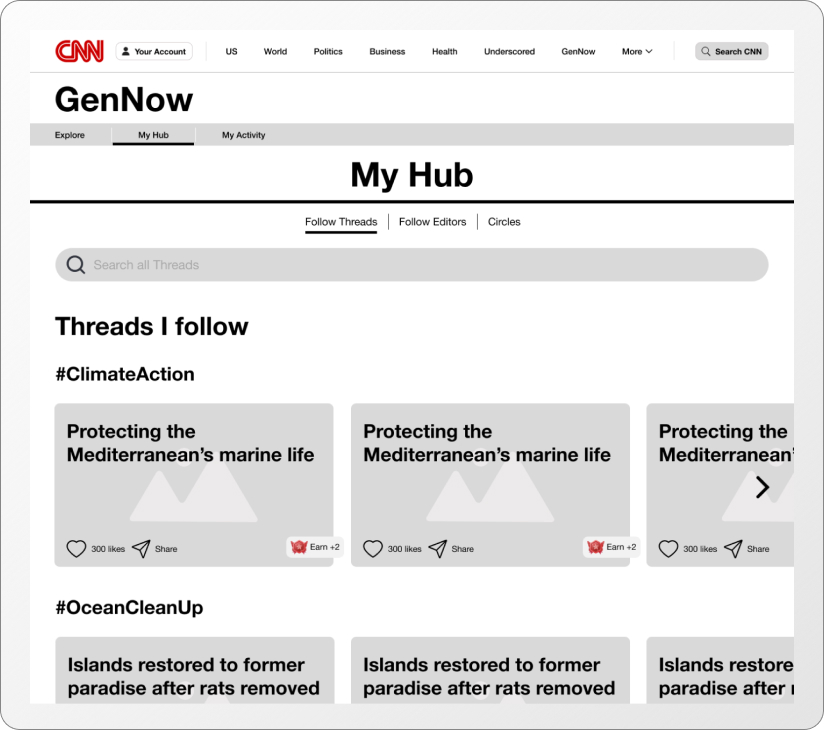
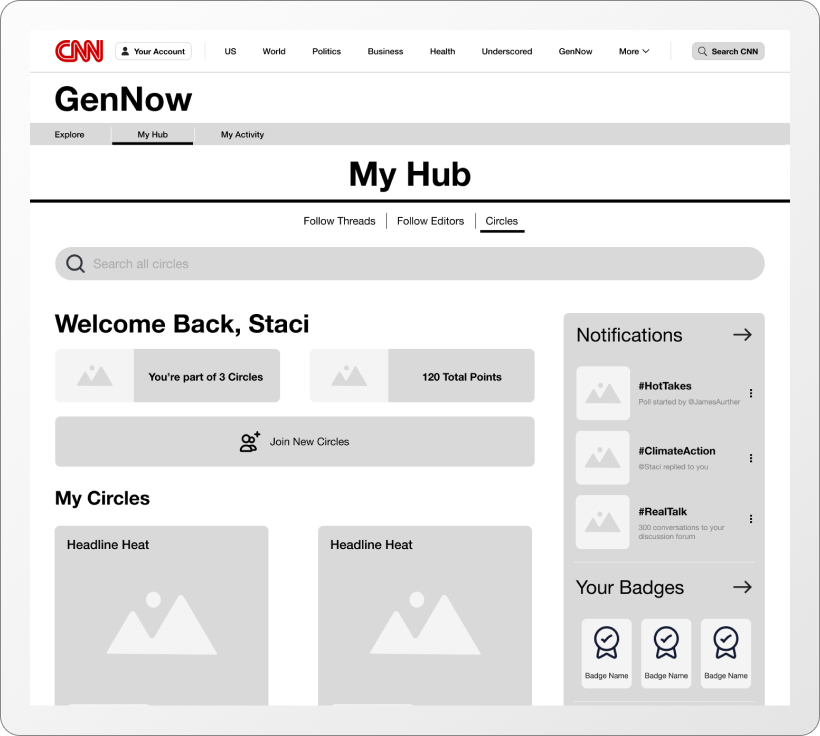
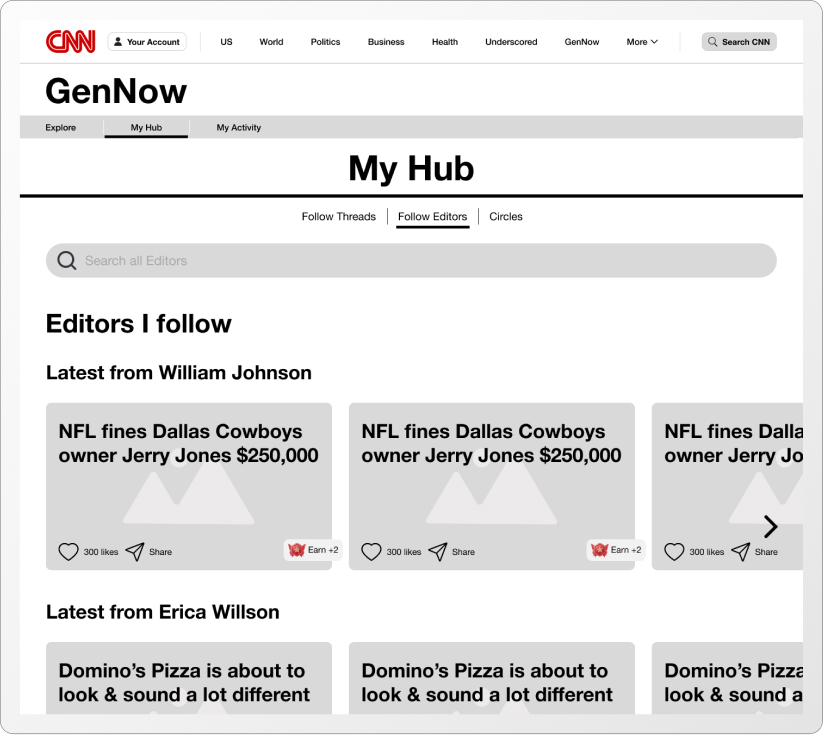
Five clear sections, so every page has one job: Explore, Threads, Editors, Circles and My Activity.
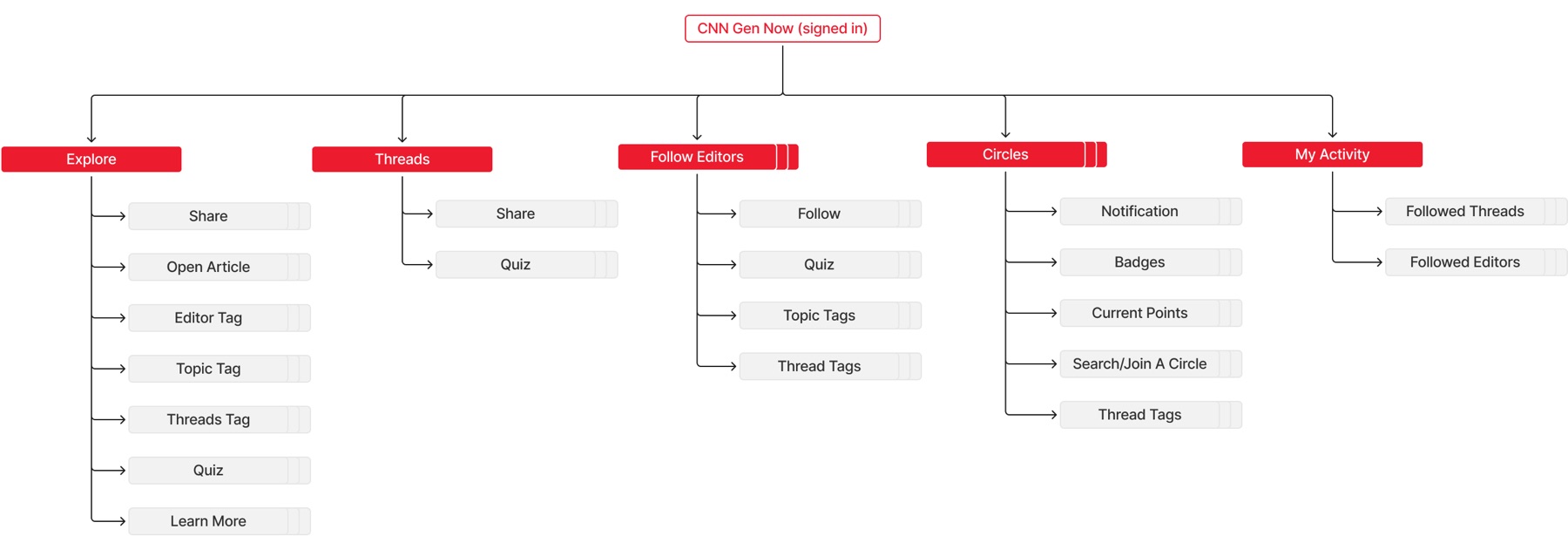
03
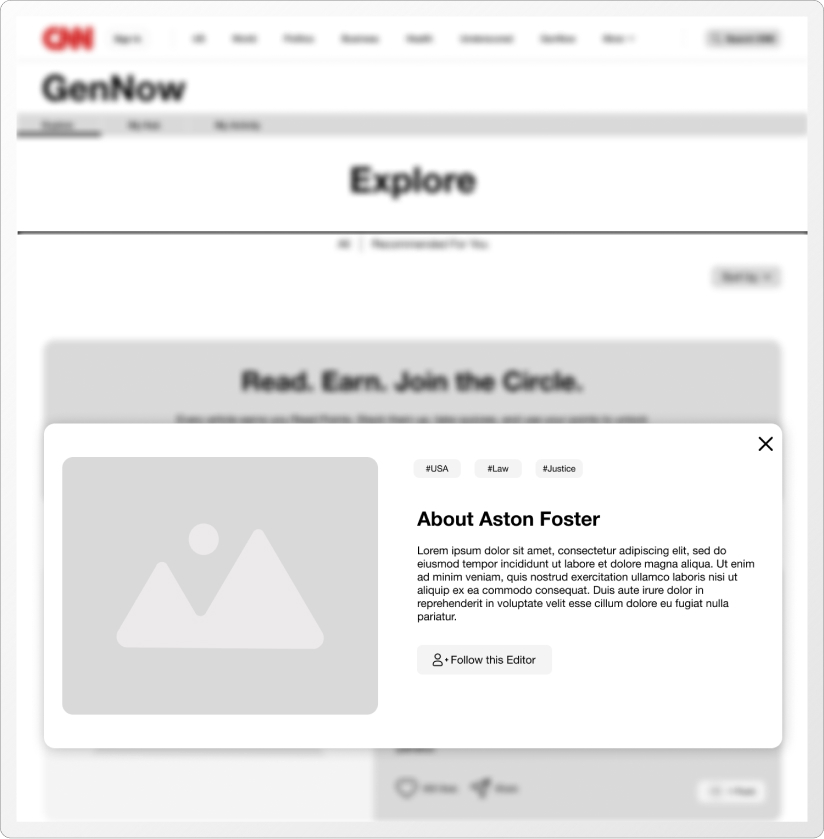
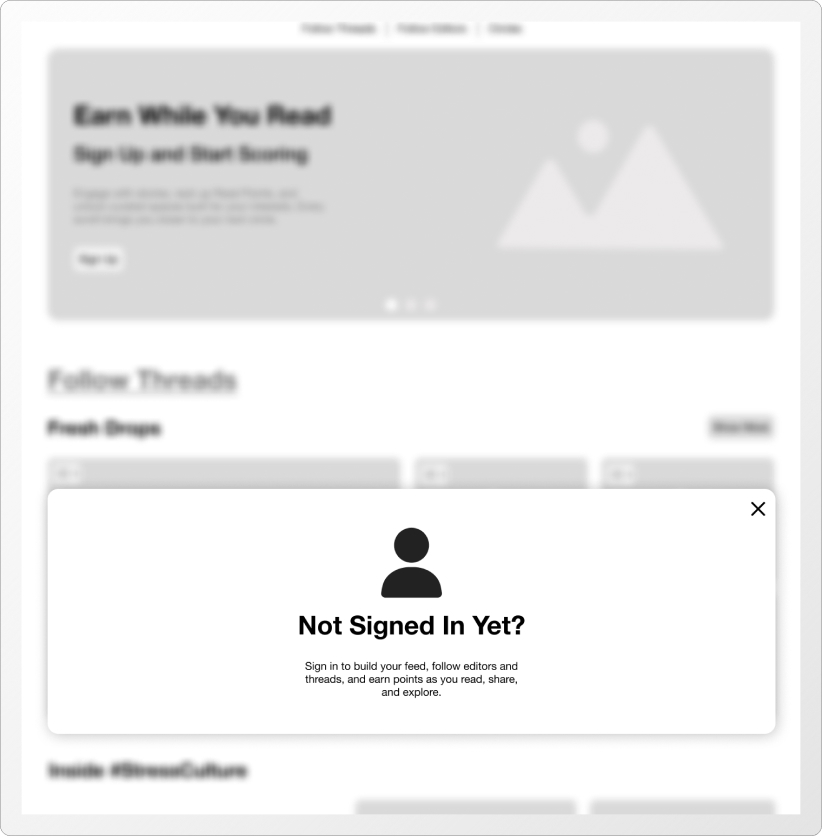
Greyscale screens for the hub, pop-ups and points, ready to test.
04
CNN’s red, real stories and a points system people can see.
We ran moderated, think-aloud sessions with 30 Gen Z readers aged 19 to 24, then refined the prototype around what tripped them up.
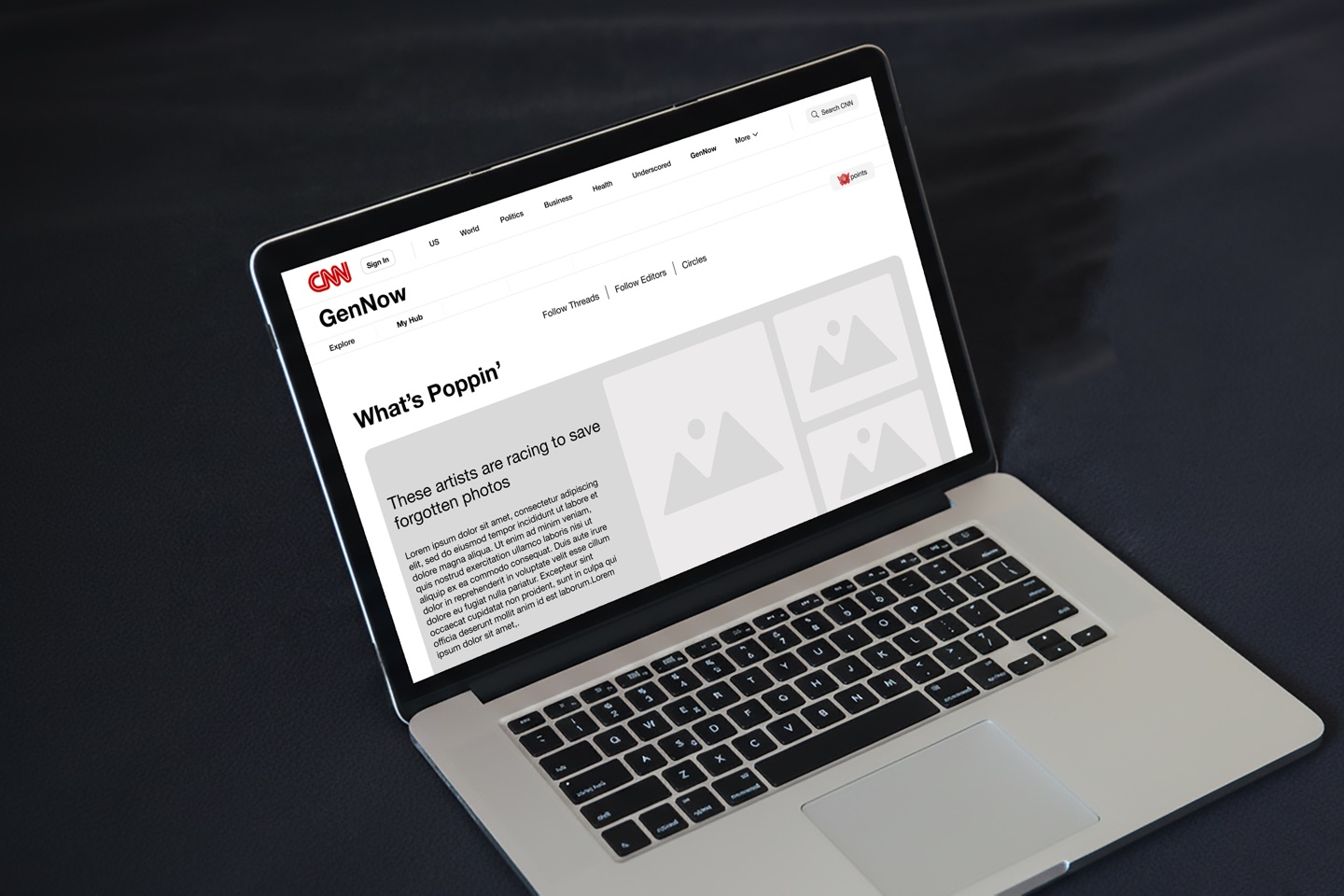
Unfamiliar terms and nested tabs buried key sections like Threads, Editors and Circles.
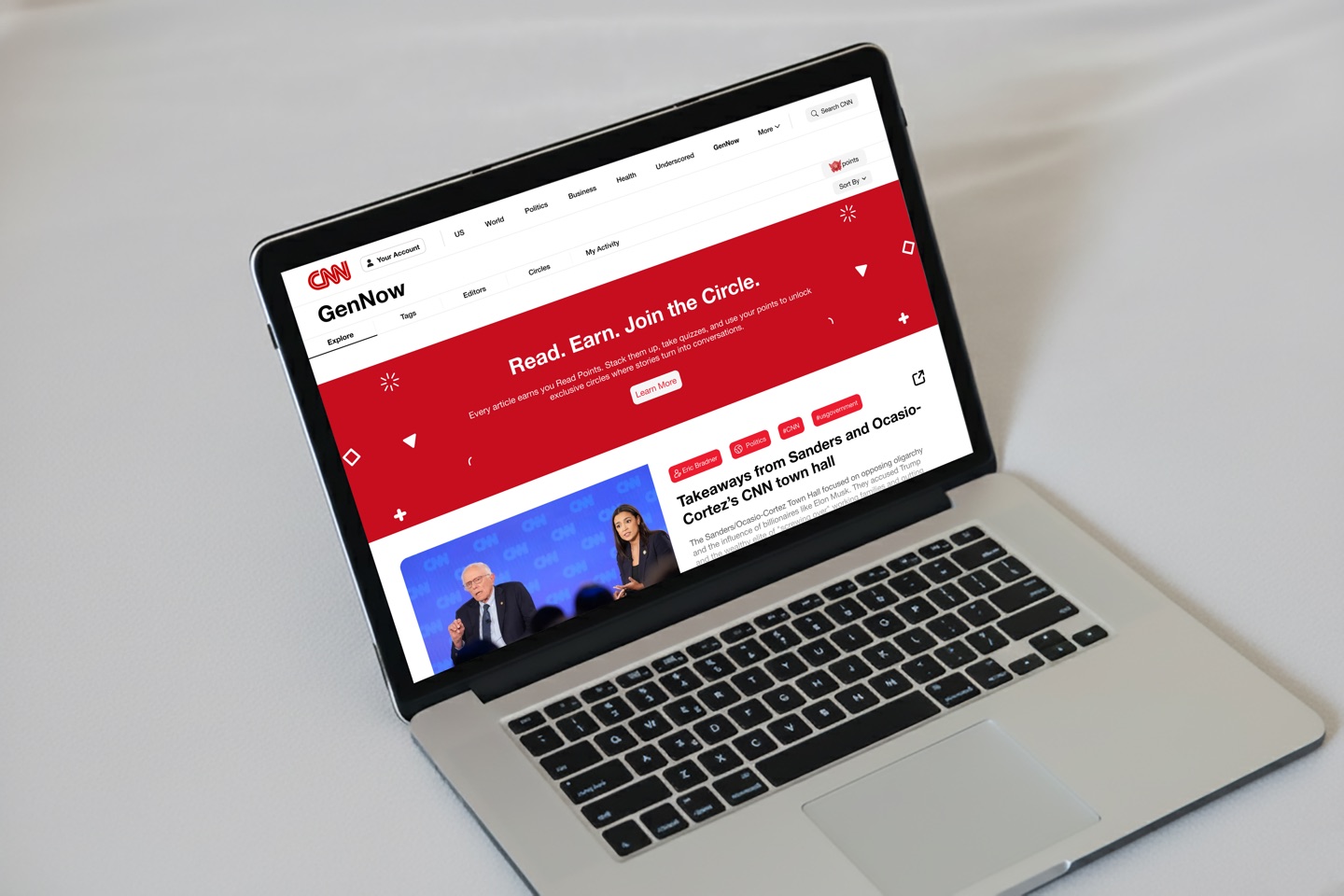
Tabs now sit in the local nav bar, and “Threads” was renamed “Tags” to match users’ mental model.
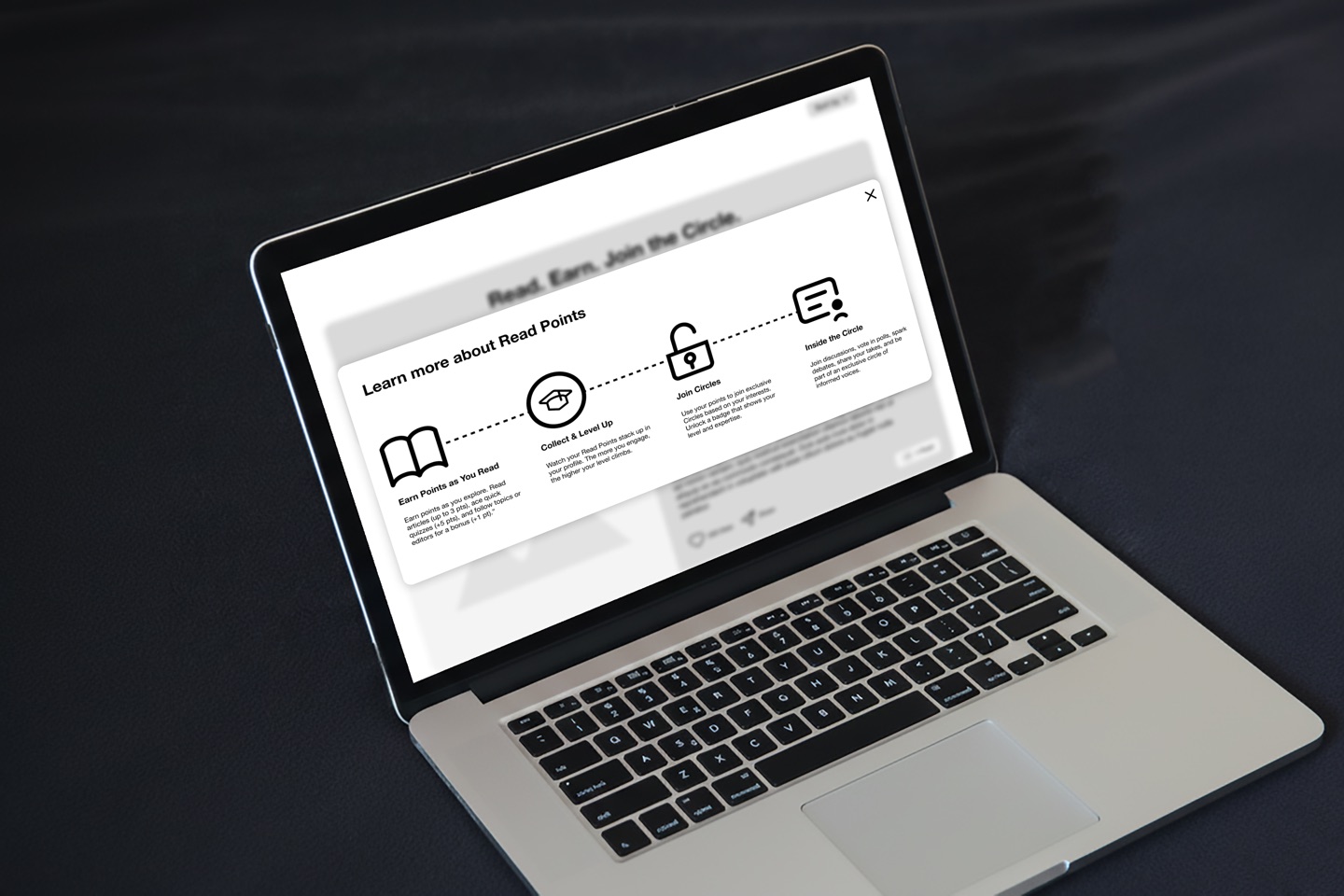
Participants needed verbal confirmation to understand how points add up and how the system works.
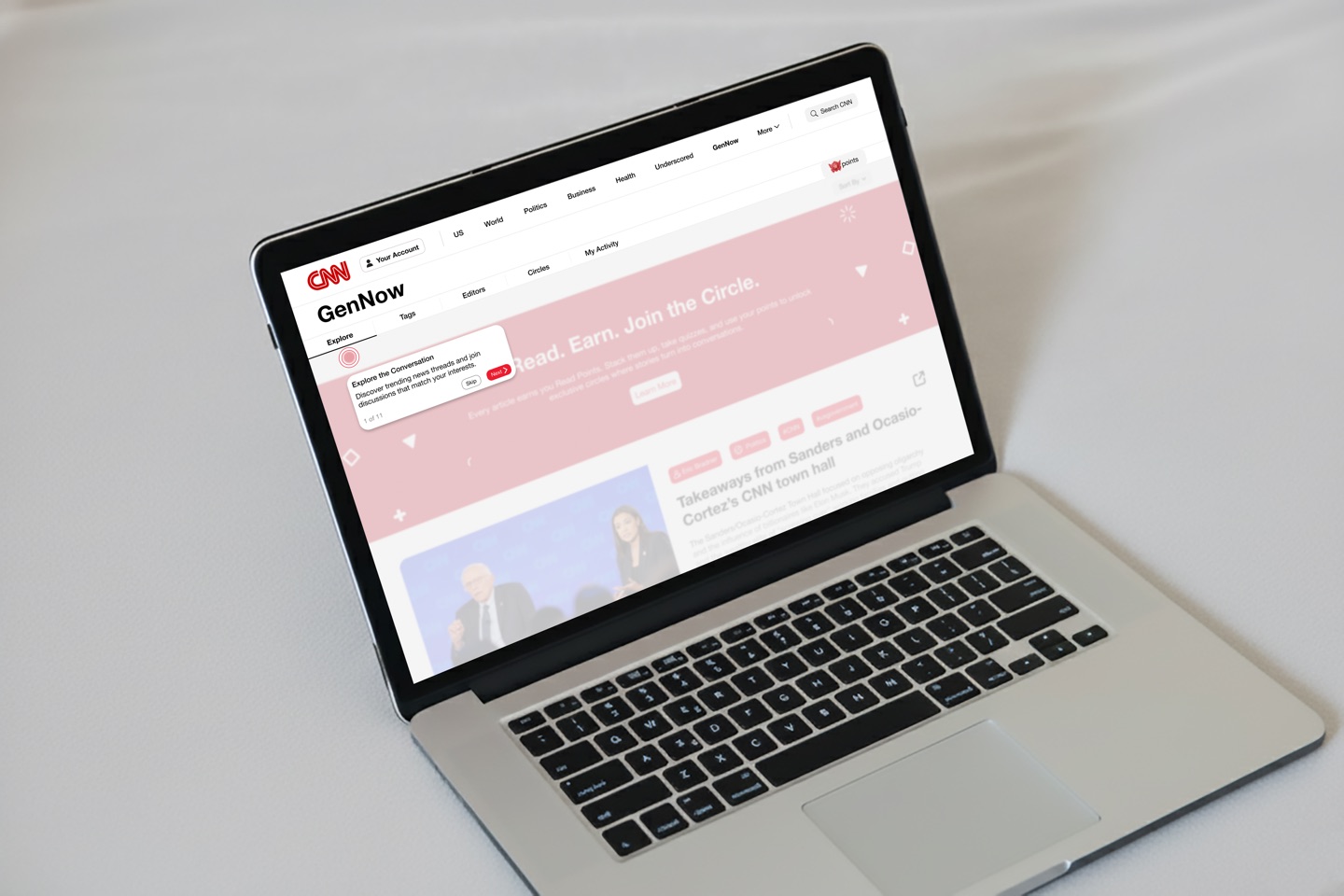
A sign-in tour now explains GenNow and how points are earned.
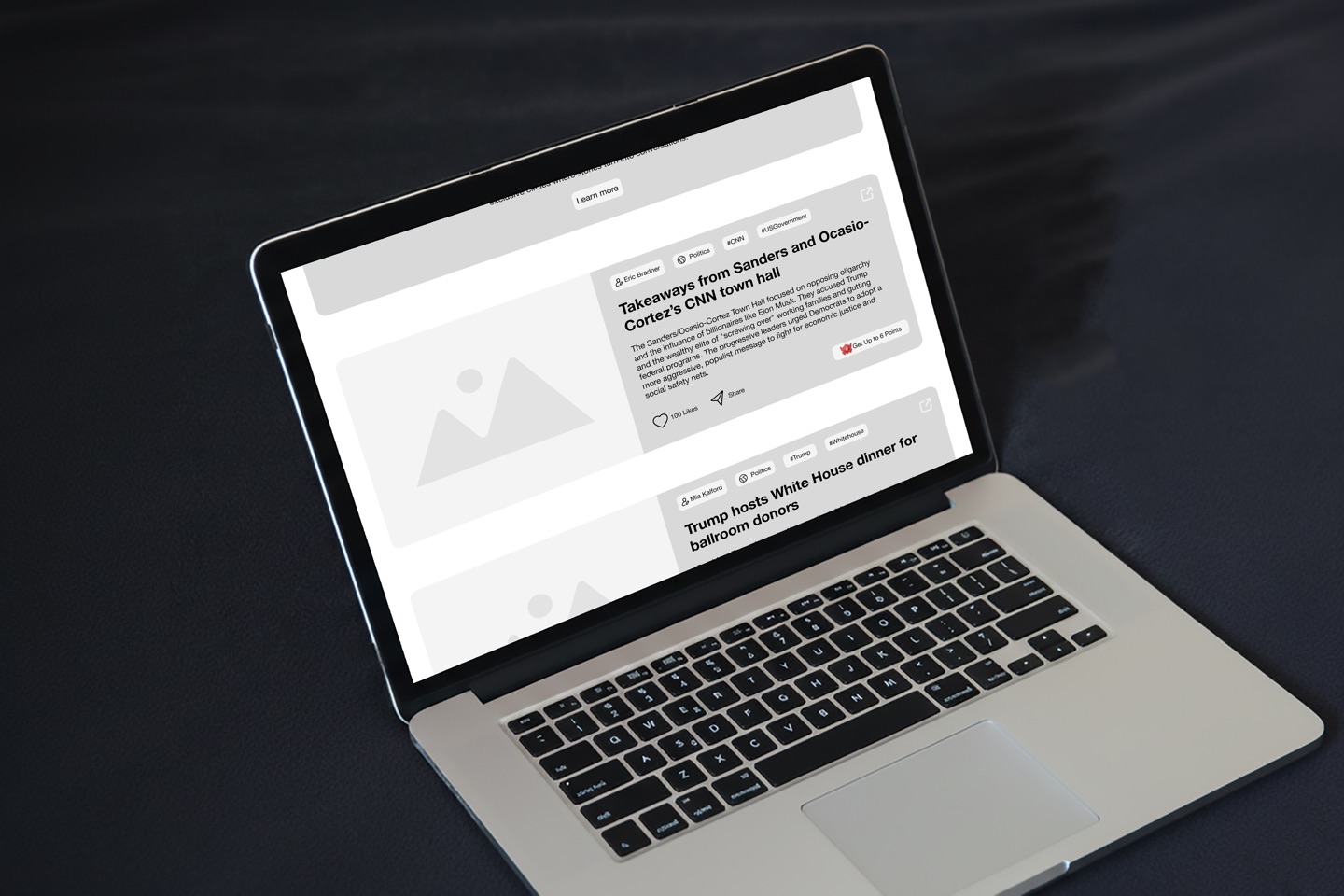
Users pointed out they could earn points by clicking the points button over and over.
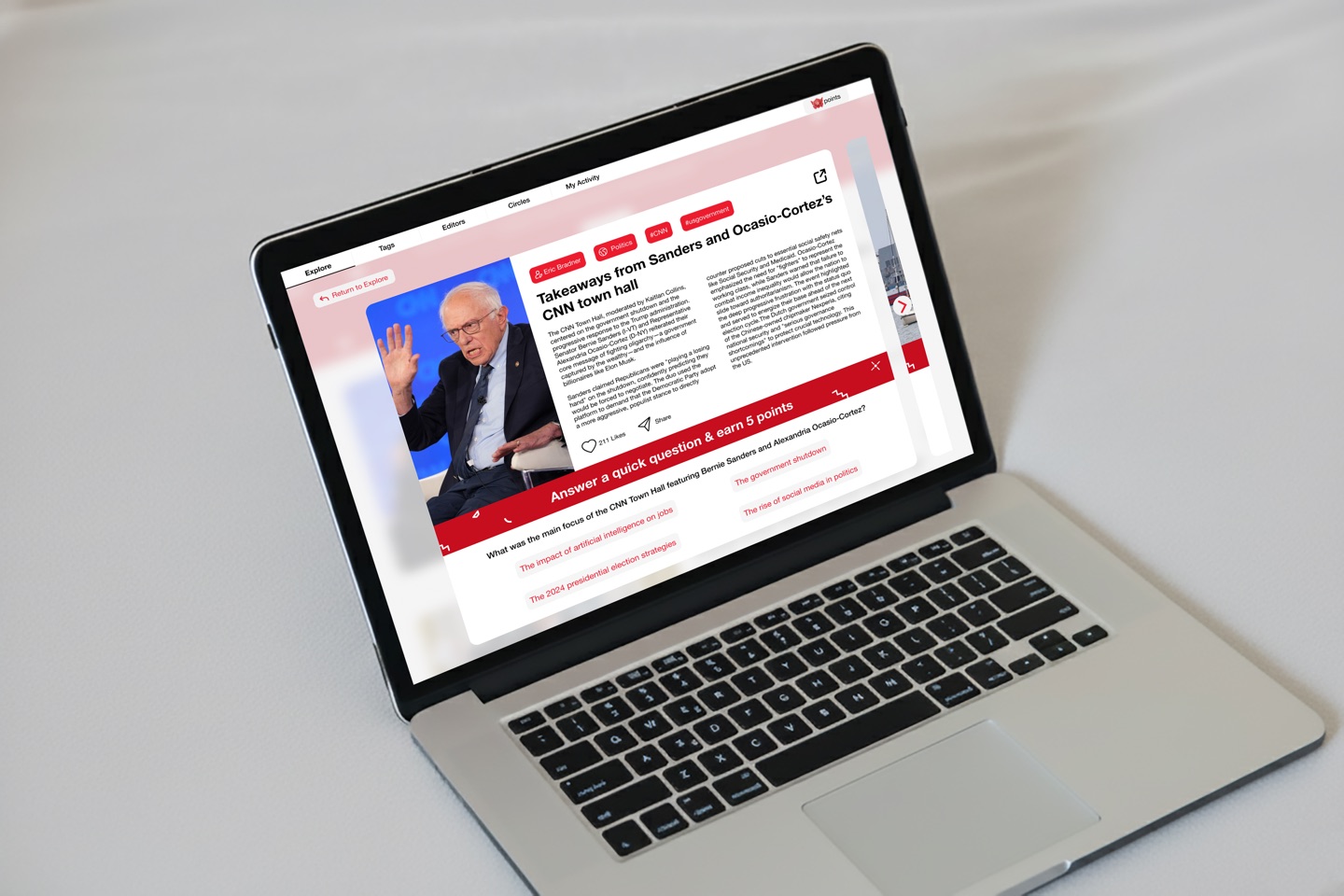
Readers now answer a quick question on each news card to collect points.
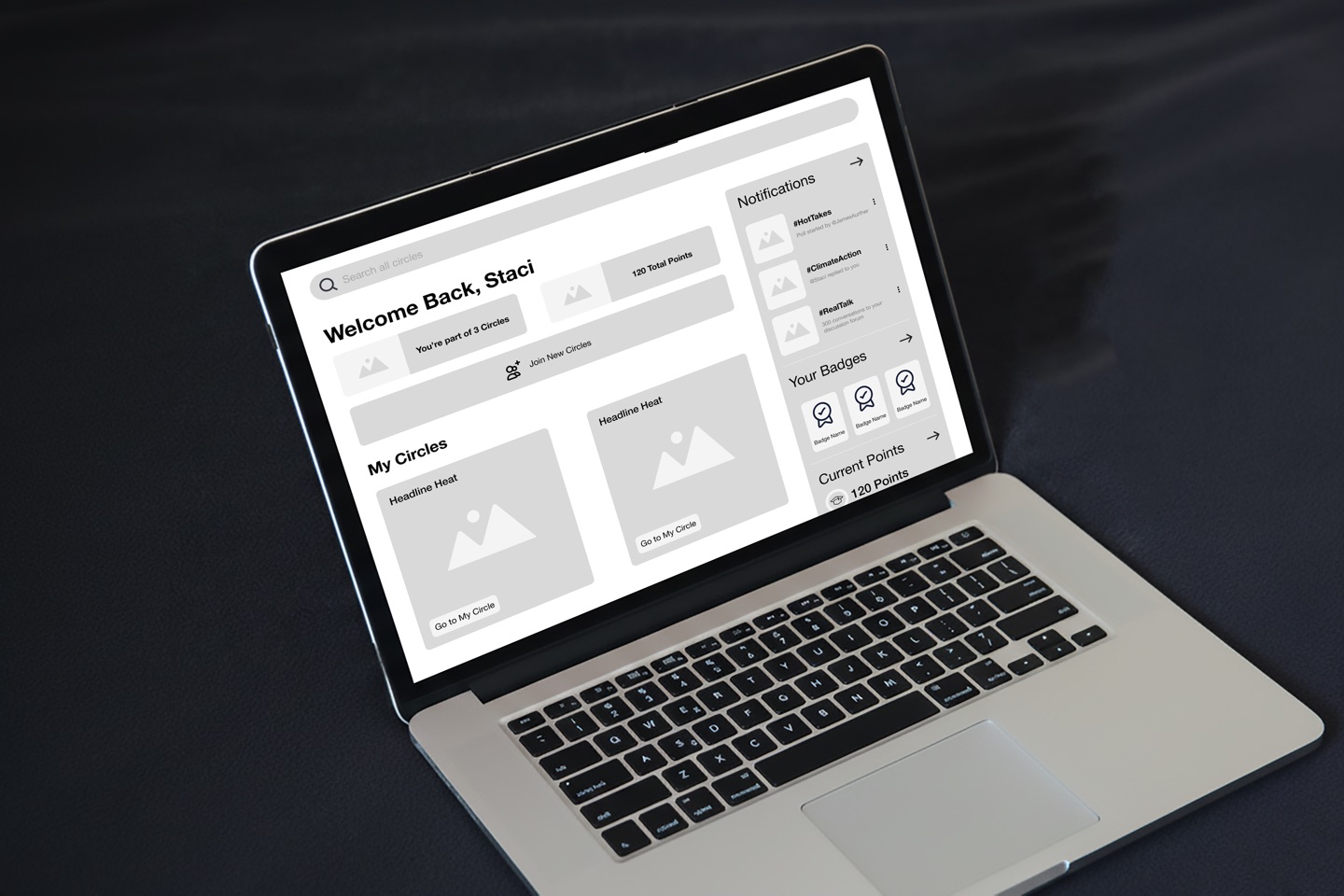
Participants said circles needed to look more inviting before they’d want to join.
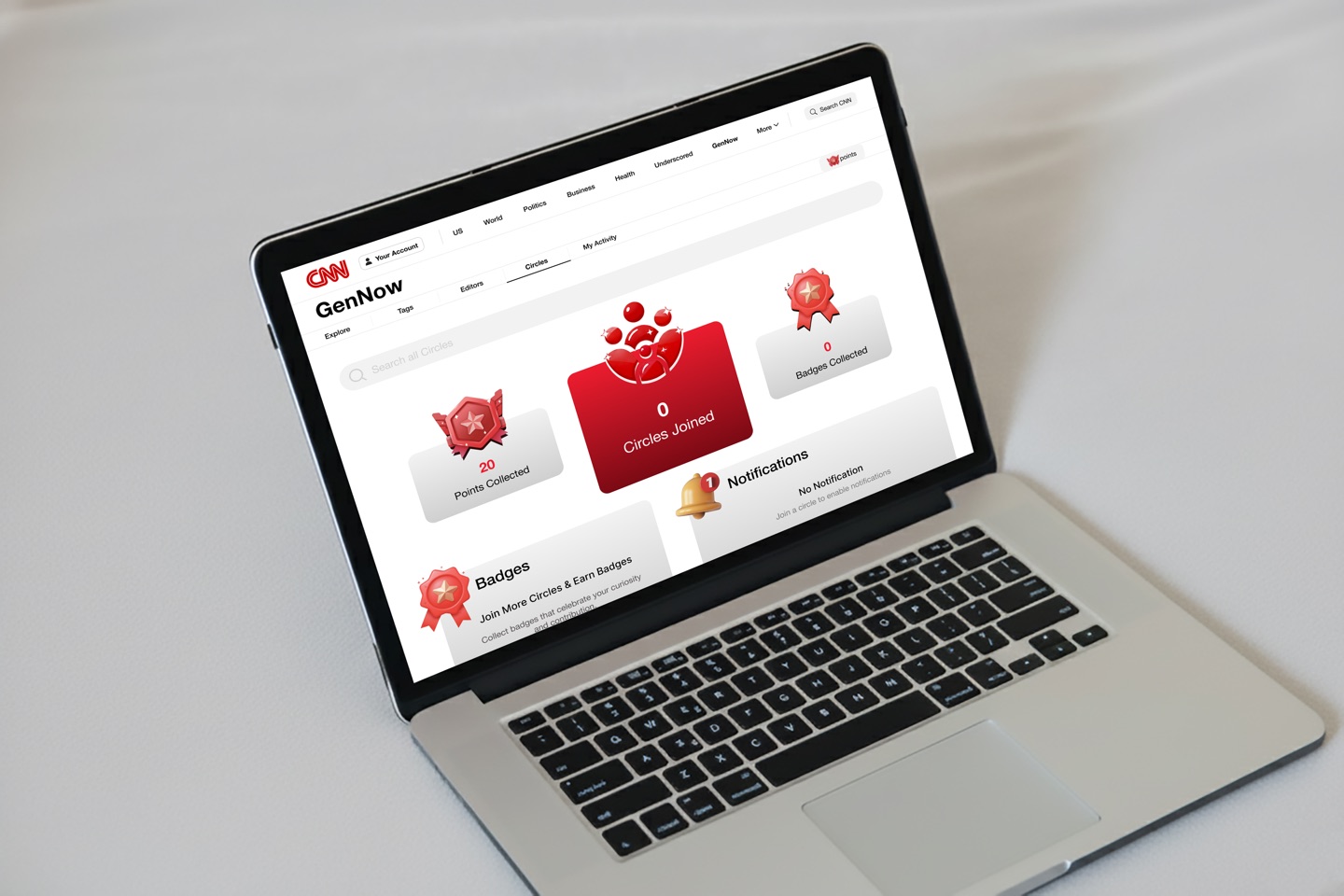
Loud yet subtle visuals make Circles feel like an exclusive community, sparking curiosity.
07 · Learnings
01
The challenge
Coming in, I assumed news design had to be either “serious and credible” or “fun and Gen Z.”
What I learned
Credibility and engagement aren’t opposites. With the right architecture, interaction and hierarchy, news can be trustworthy and scroll-worthy.
02
The challenge
I first relied on assumptions about how Gen Z consumes news (fast, visual, swipeable) without the deeper patterns behind it.
What I learned
Grounding decisions in behavioral insights, not trends, led to features that match real motivations, not just “short attention spans.”
03
The challenge
CNN is a massive content universe, and my first instinct to “fix everything at once” led to cluttered flows.
What I learned
Breaking it into modular, purpose-driven sections taught me that good IA is about clarity and giving every page one job.