Product experience
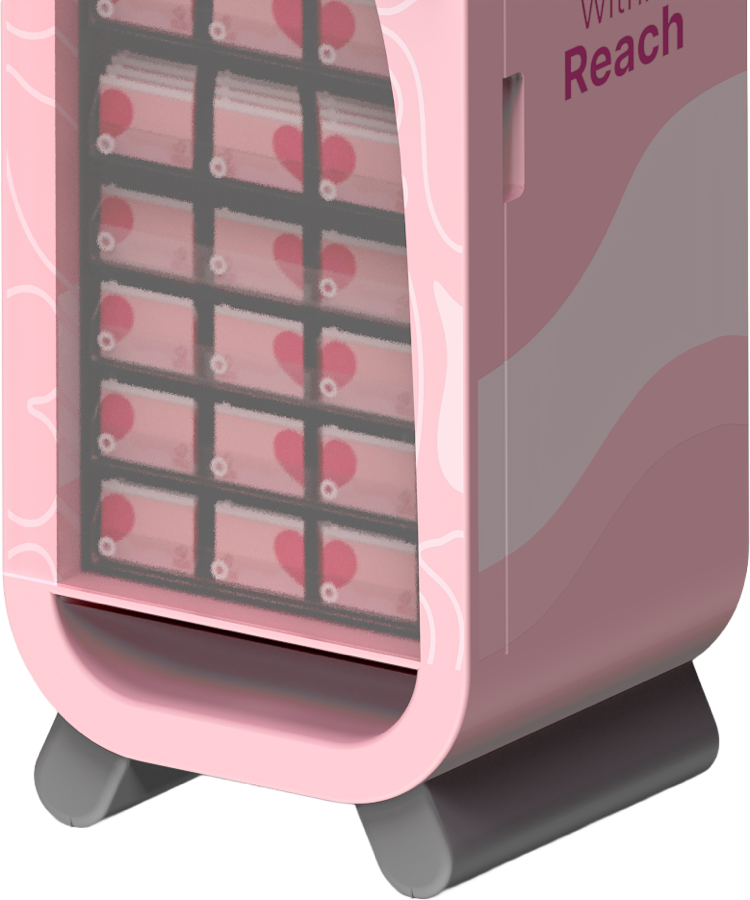
The Vending Machine
Wall-mounted and standalone units that dispense two curated kits in schools, libraries and community spaces.
Problem
Low-income individuals struggle to access menstrual products, and schools and libraries lack the resources, storage and restocking to supply them consistently.
Solution
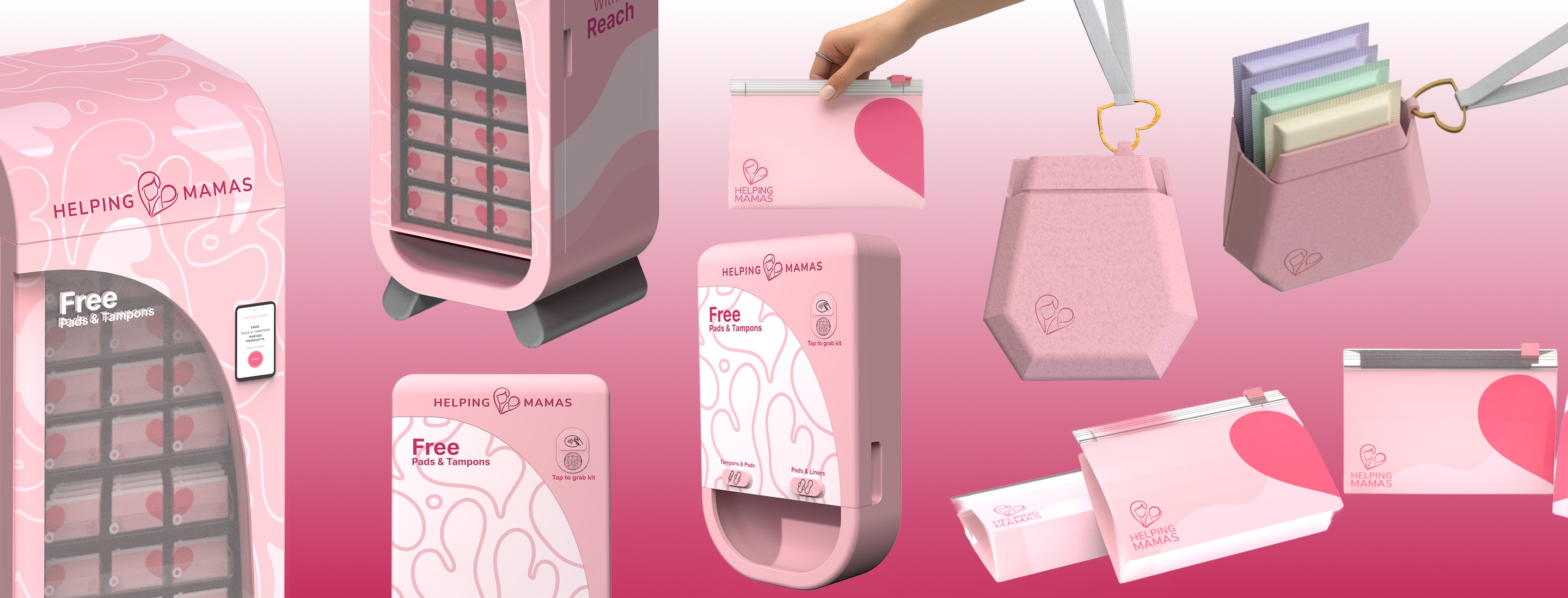
A menstrual care ecosystem of modular dispensers, bundled kits, tap-to-access cards, sustainable packaging and awareness campaigns, making distribution dignified, efficient and scalable.
Impact
Client-approved and production-bound, with a scalable menstrual care ecosystem designed for deployment across 100 locations.
01 · The Challenge
Proof that period poverty still keeps dreams on hold. Menstruation remains one of the most common reasons for absence, silence and stigma in public spaces.
1 in 5
students in the U.S., and 23% globally, face barriers to menstrual care.
Many schools lack dedicated period product infrastructure.
1 in 4 menstruators struggle to afford products regularly.
Periods are still stigmatized; conversations happen behind closed doors.
The client
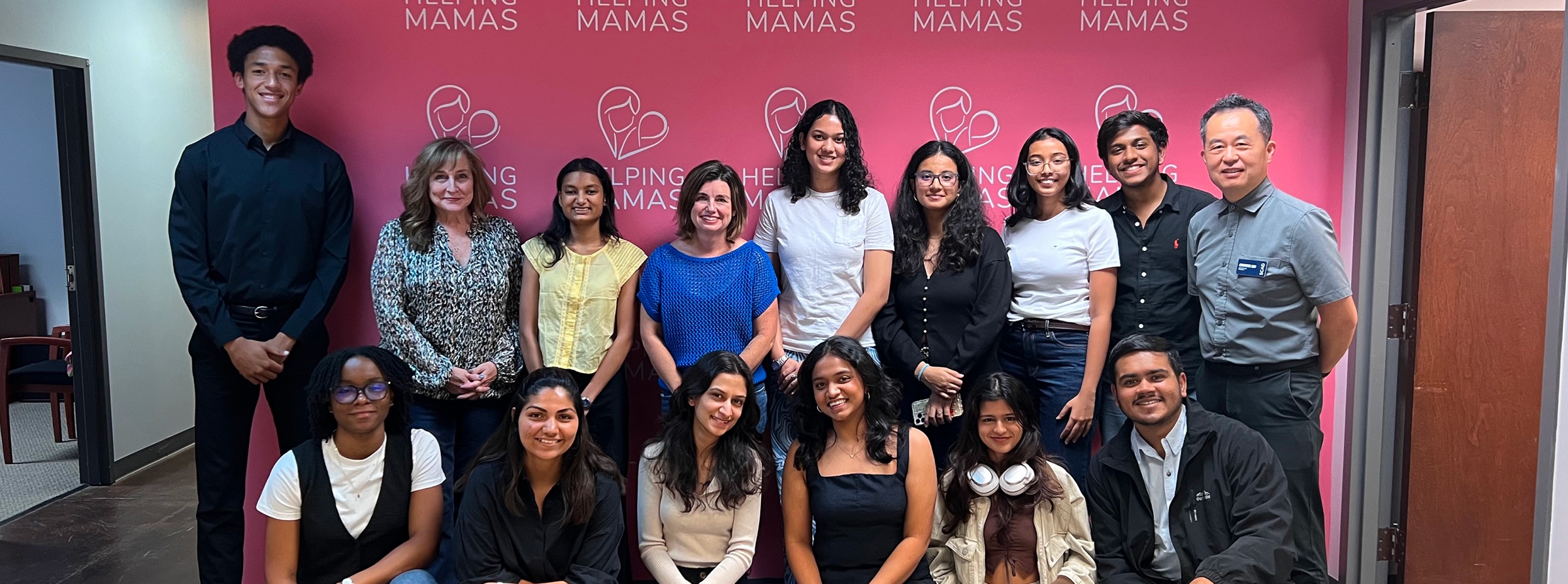
Helping Mamas is a nonprofit that provides essential baby and period products to women and children in need. Today, five vans travel to schools, shelters and community centers, and the model runs into the same walls again and again.
The ask
Create a dignified, compact and adaptable solution that not only distributes products, but also raises awareness, rethinks packaging, and explores beyond the machine.
02 · Research
We spoke to the people affected, read what’s been written and went to the places where access breaks down.
What the numbers say
Menstrual product inaccessibility is structural, driven by inflation, stigma and institutional gaps, not an individual shortcoming.
Six insights that shaped the design
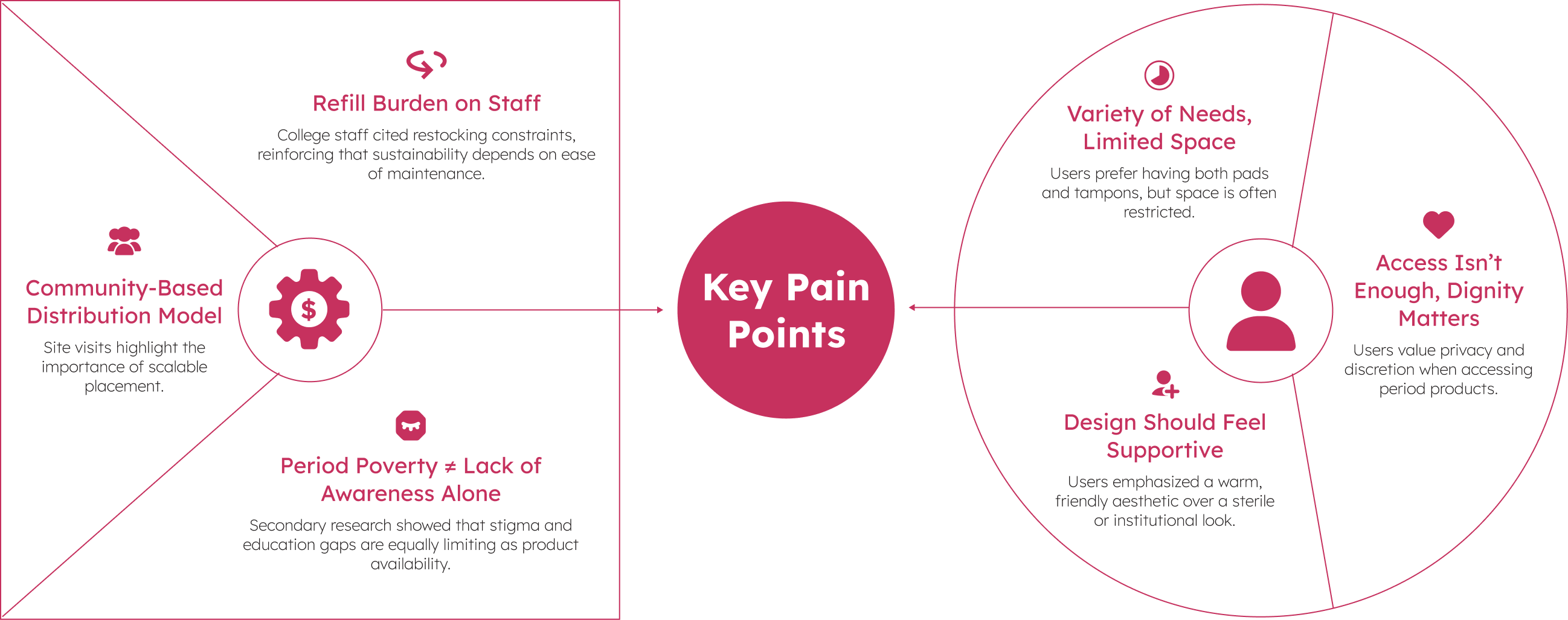
Five pillars of dignity
How might we
design a dignified, sustainable and reliable machine for menstrual products, so it’s always accessible to those who need it?
03 · The Ecosystem
Bloom rethinks how menstrual care is distributed, accessed and experienced. Four touchpoints work as one, building an environment of dignity, not dependency. Pick one to see its role.
Product experience
Wall-mounted and standalone units that dispense two curated kits in schools, libraries and community spaces.
Access
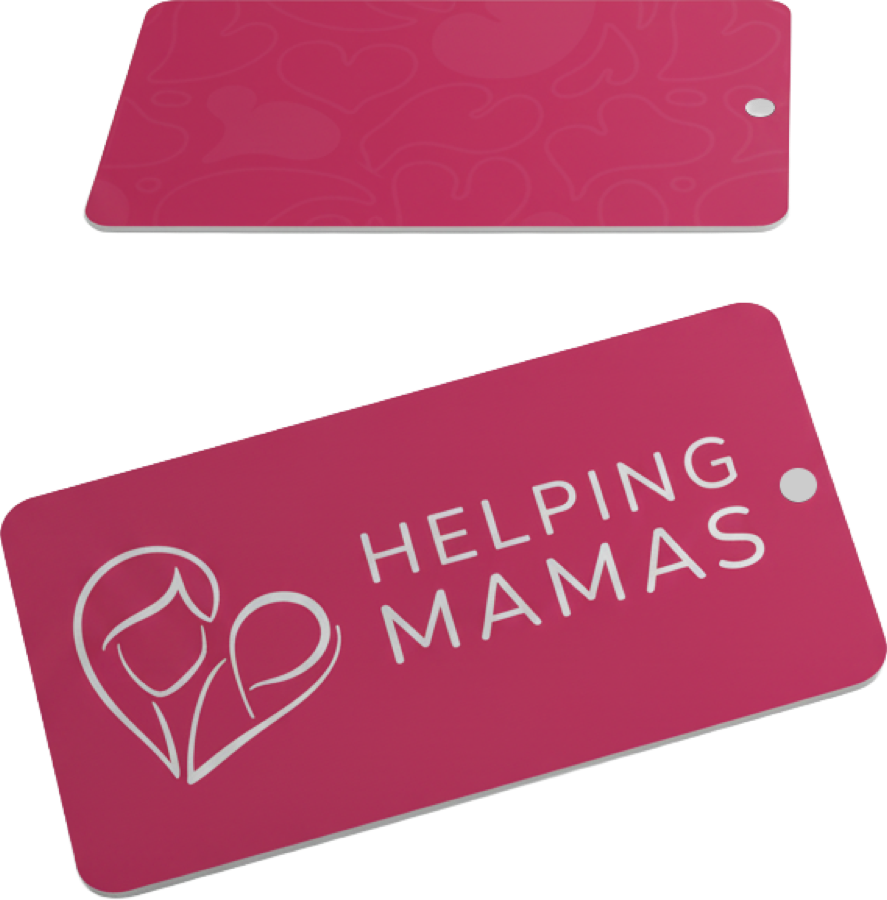
Tap once a month to redeem a kit. Usage is tracked to manage refills, and no personal data is collected, only access metrics.
Product experience
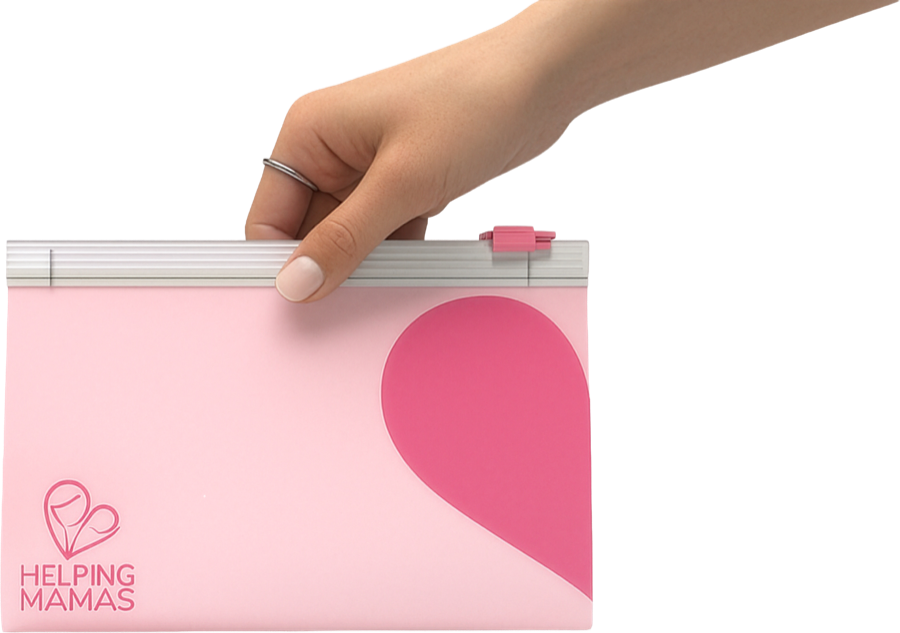
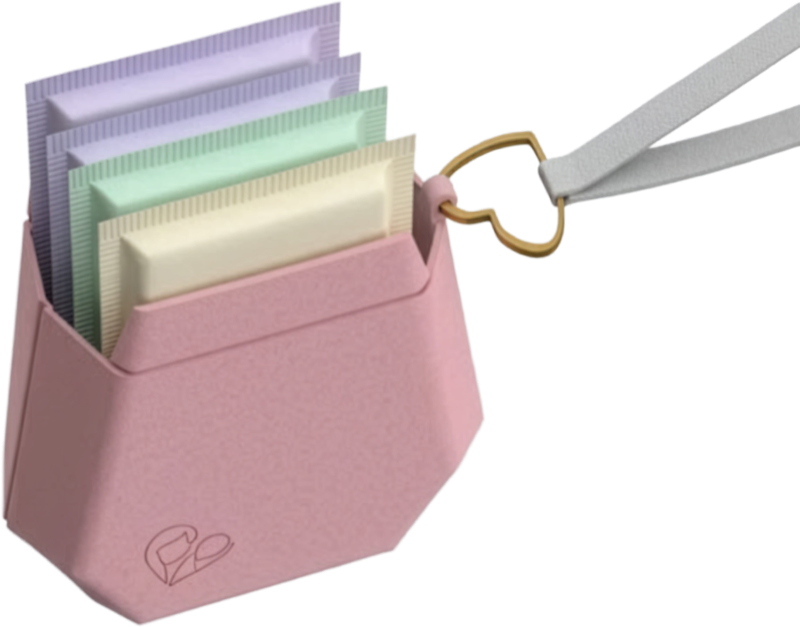
Vacuum-sealed kits for hygiene and compactness, and a reusable pouch that carries dignity beyond the machine.
Awareness & outreach
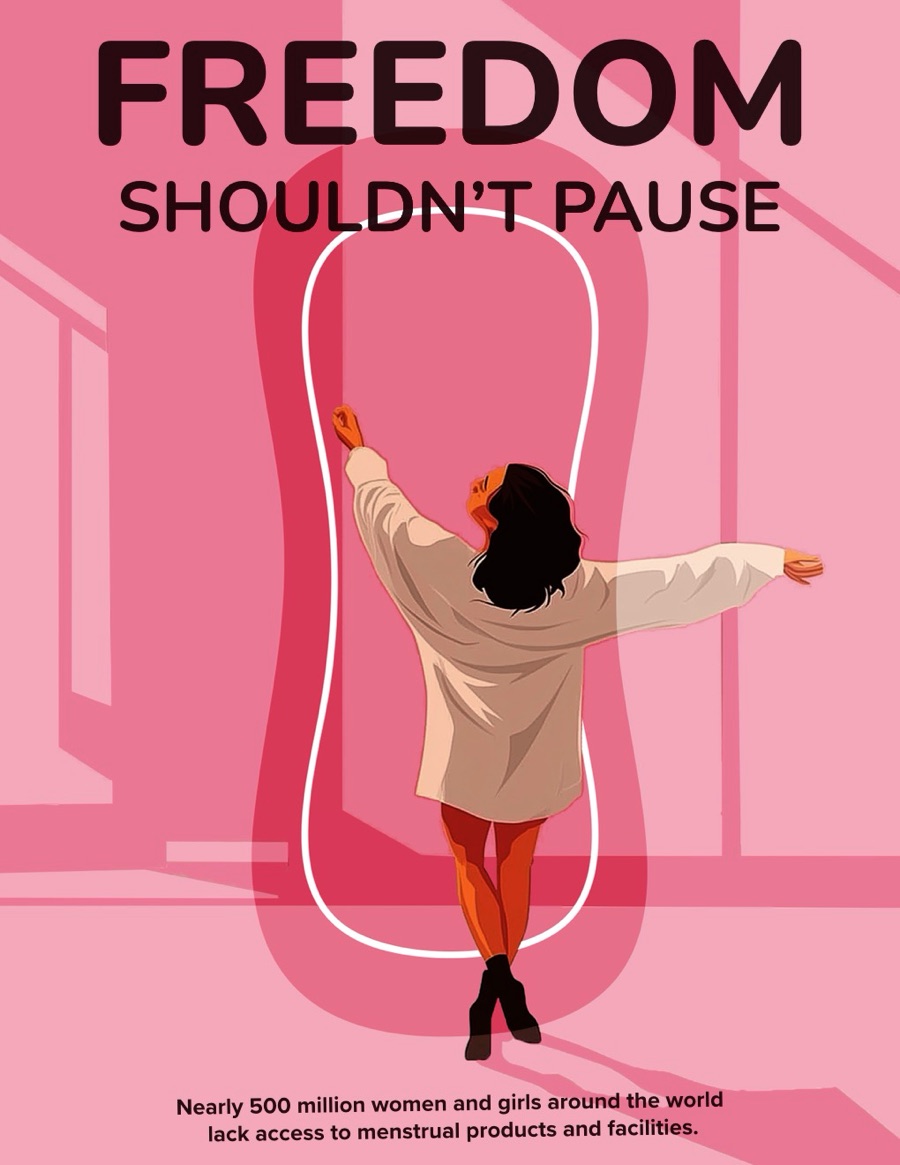
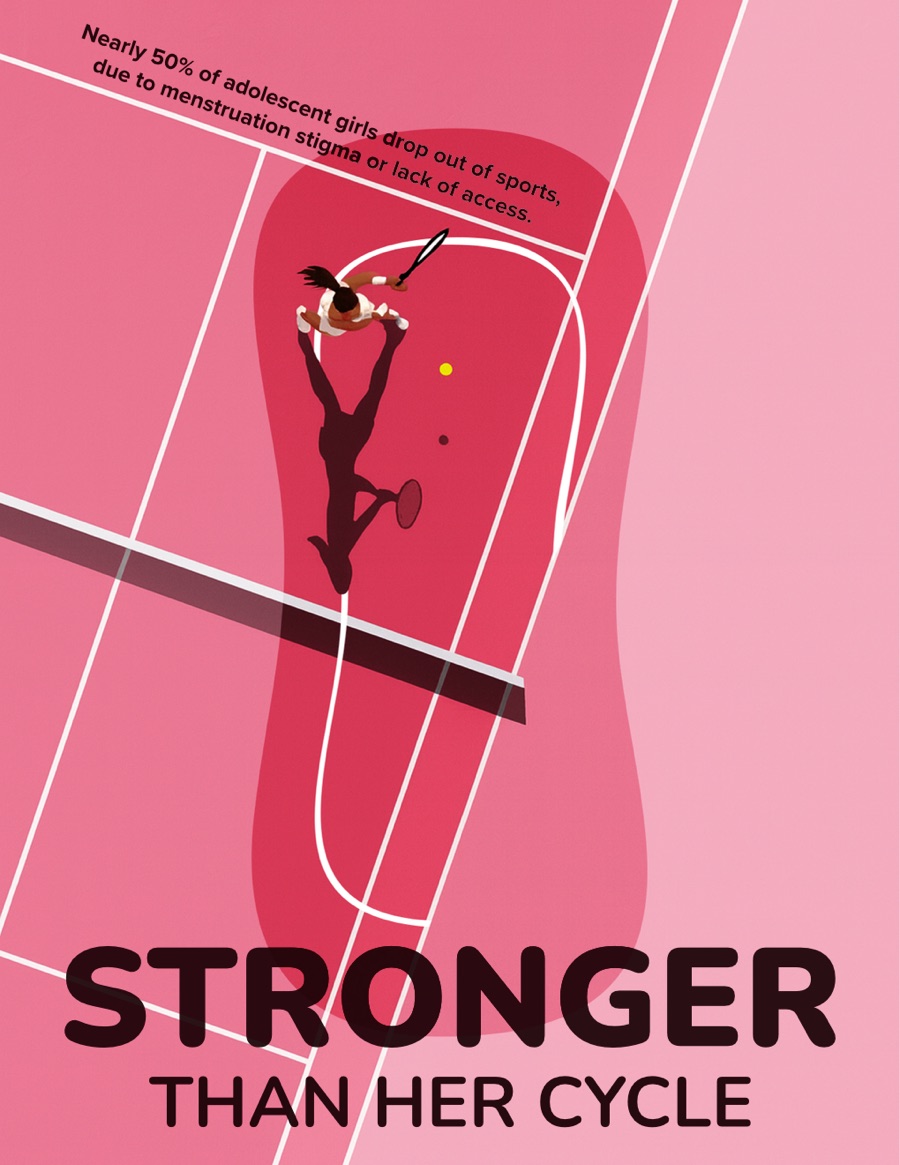
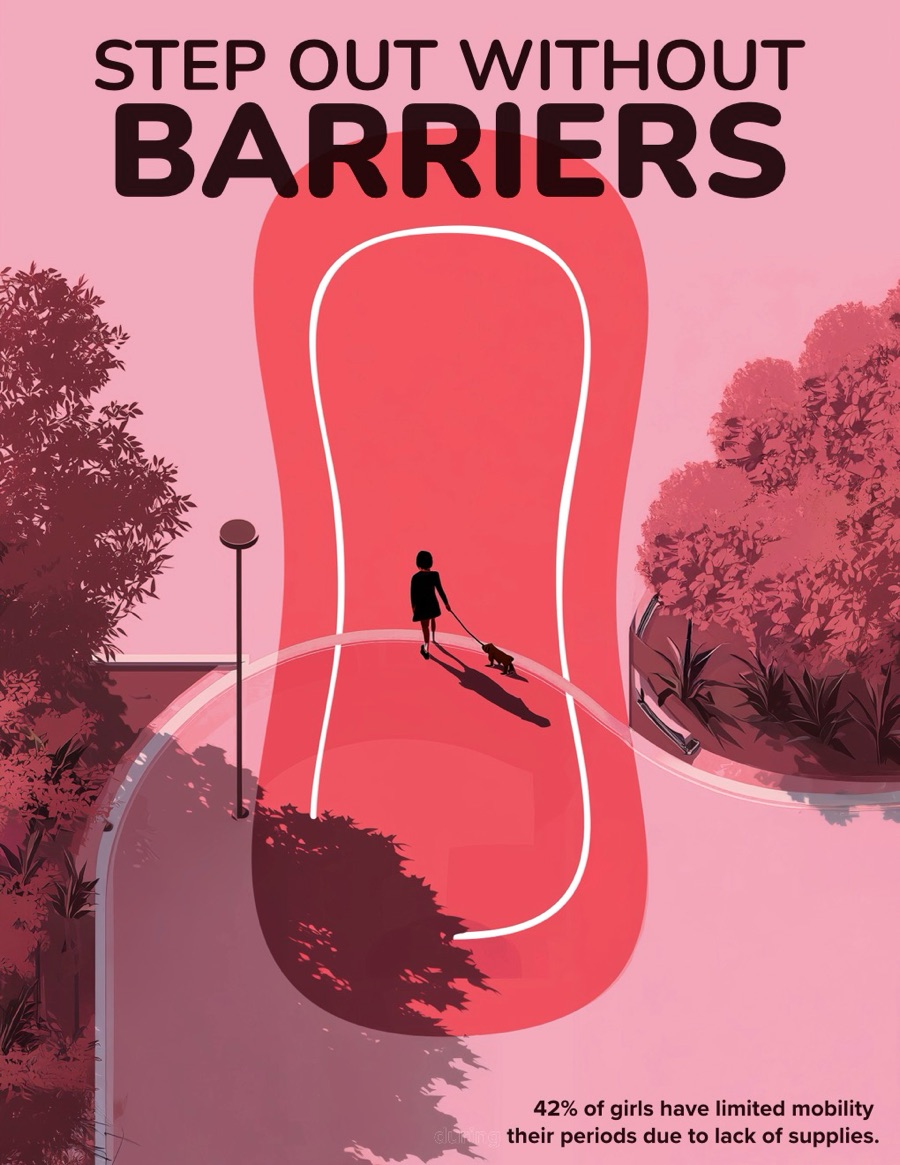
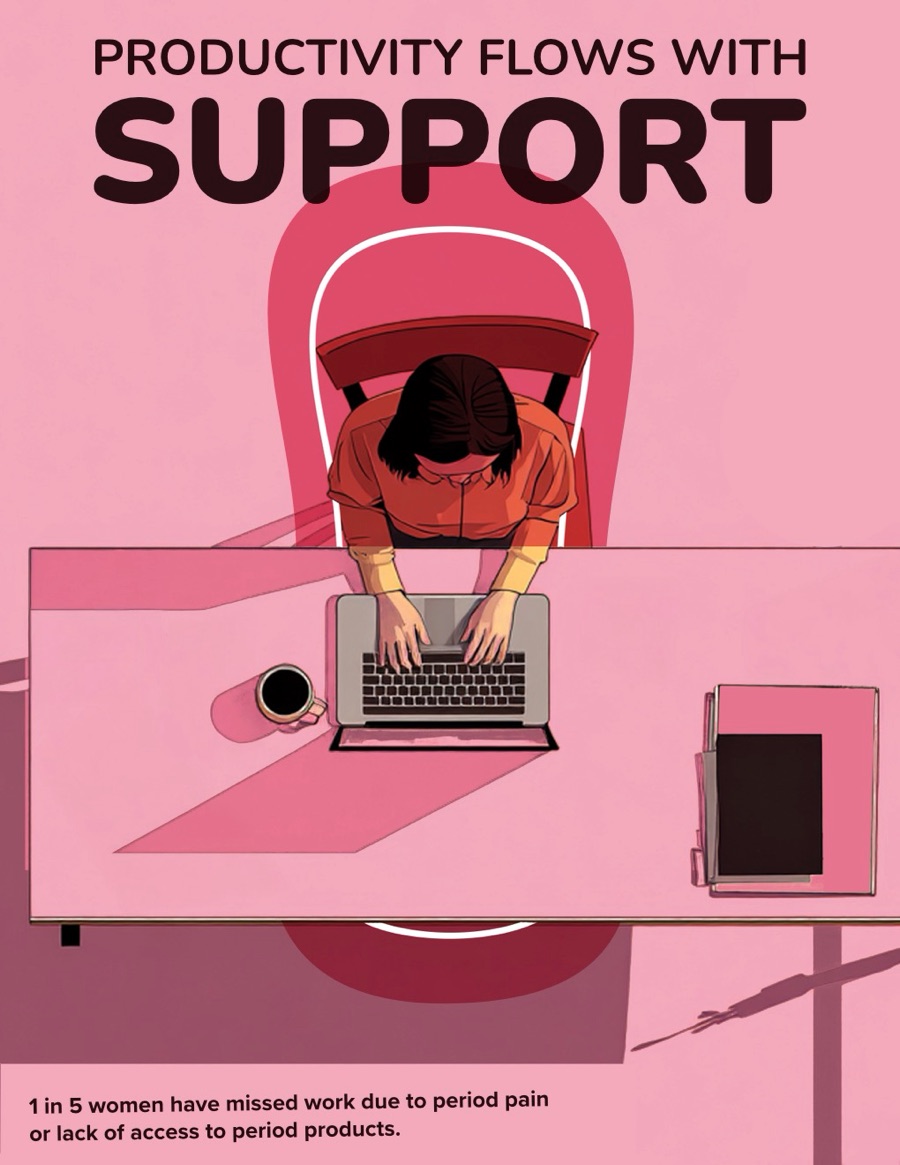
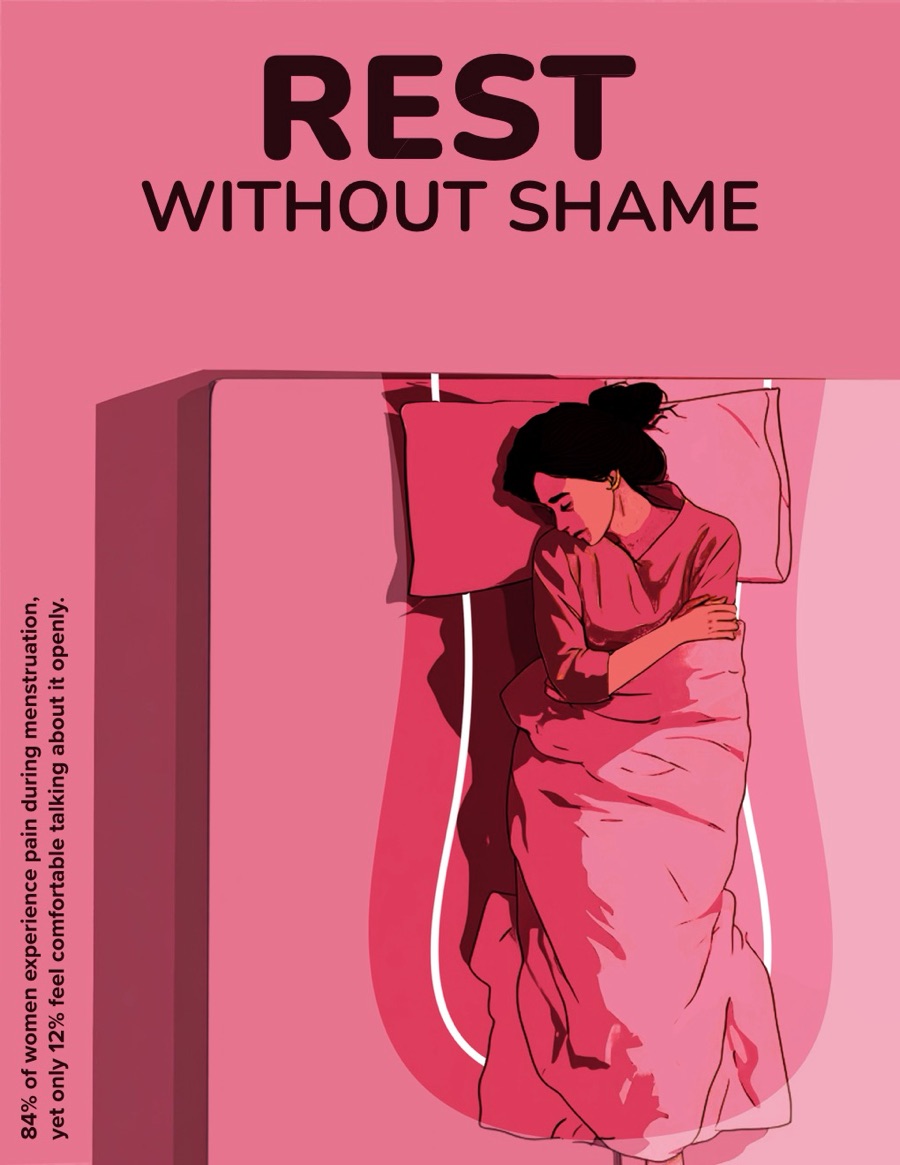
Posters that carry the conversation into the world, each one addressing a truth about menstruation.
Design criteria
Serve consistent demand.
Affordable on a nonprofit budget, adaptable to different contexts.
Ease, privacy and comfort of use.
Responsible materials and lifecycle.
Clear enough to use without instructions.
Practical in time, material and maintenance.
04 · Exploration
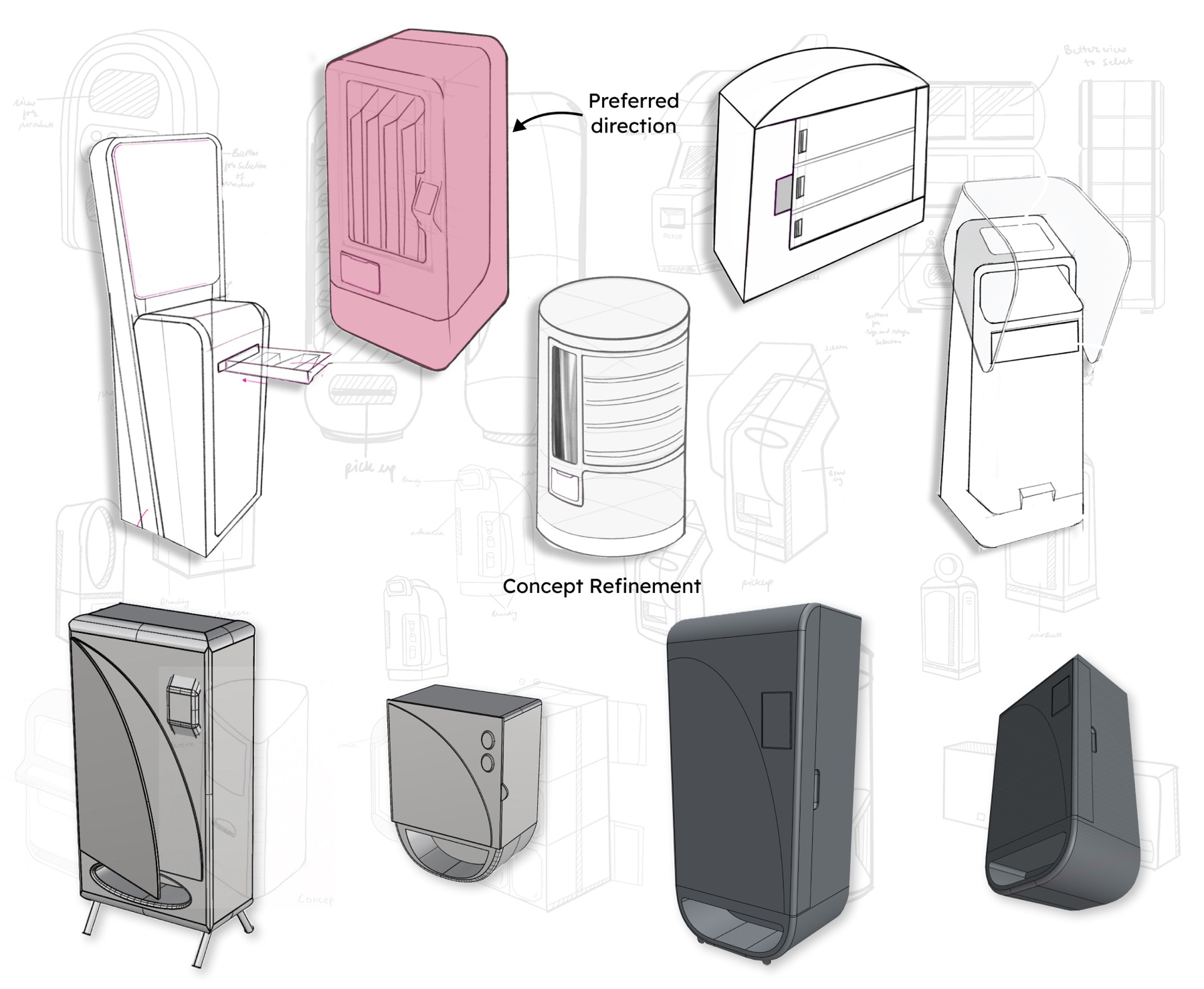
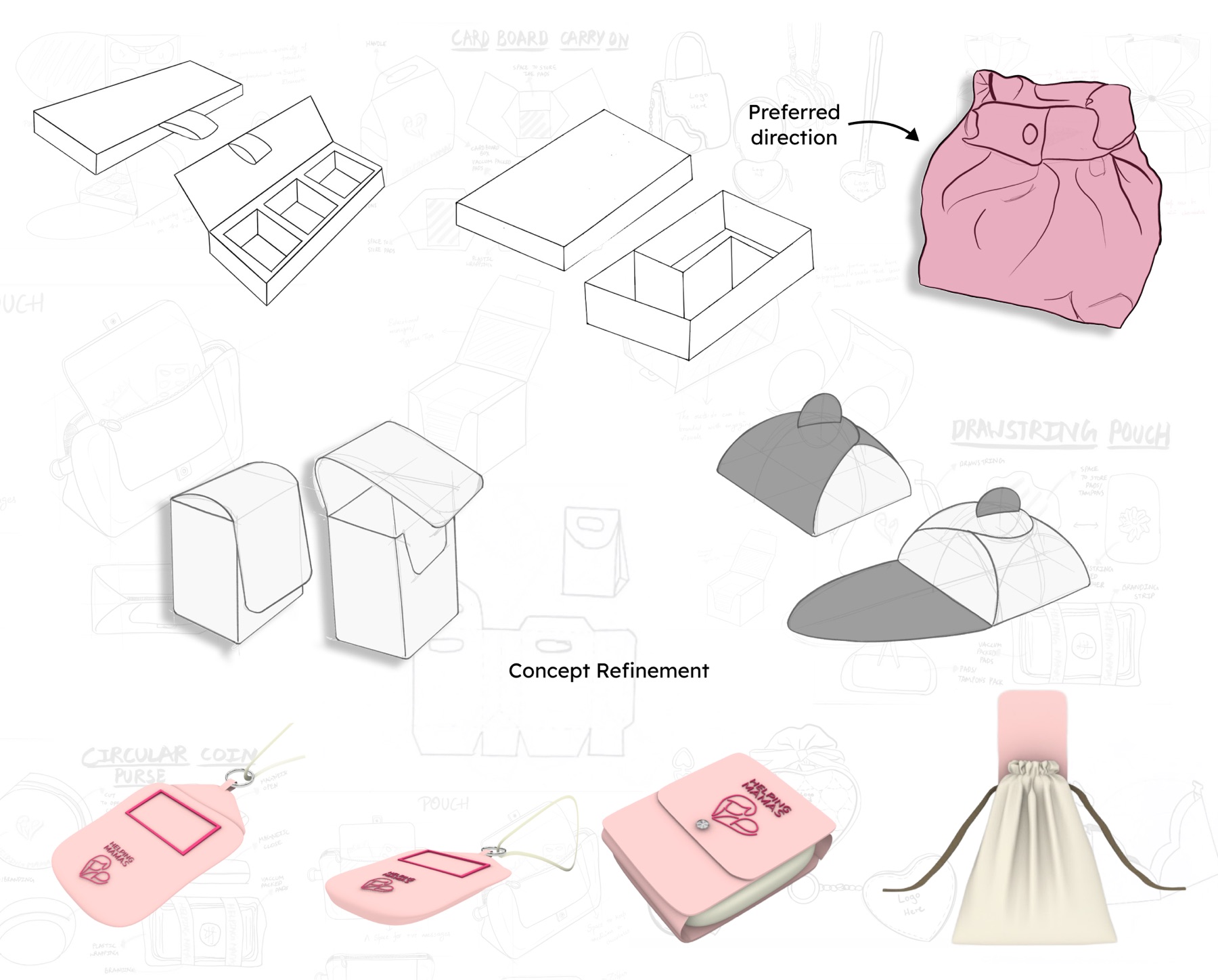
We sketched this many because we tested every idea against the design criteria, looking for the one direction that met all of them. Only the concepts that held up were refined further.
05 · The Experience
A student’s path through Bloom, in five moments.
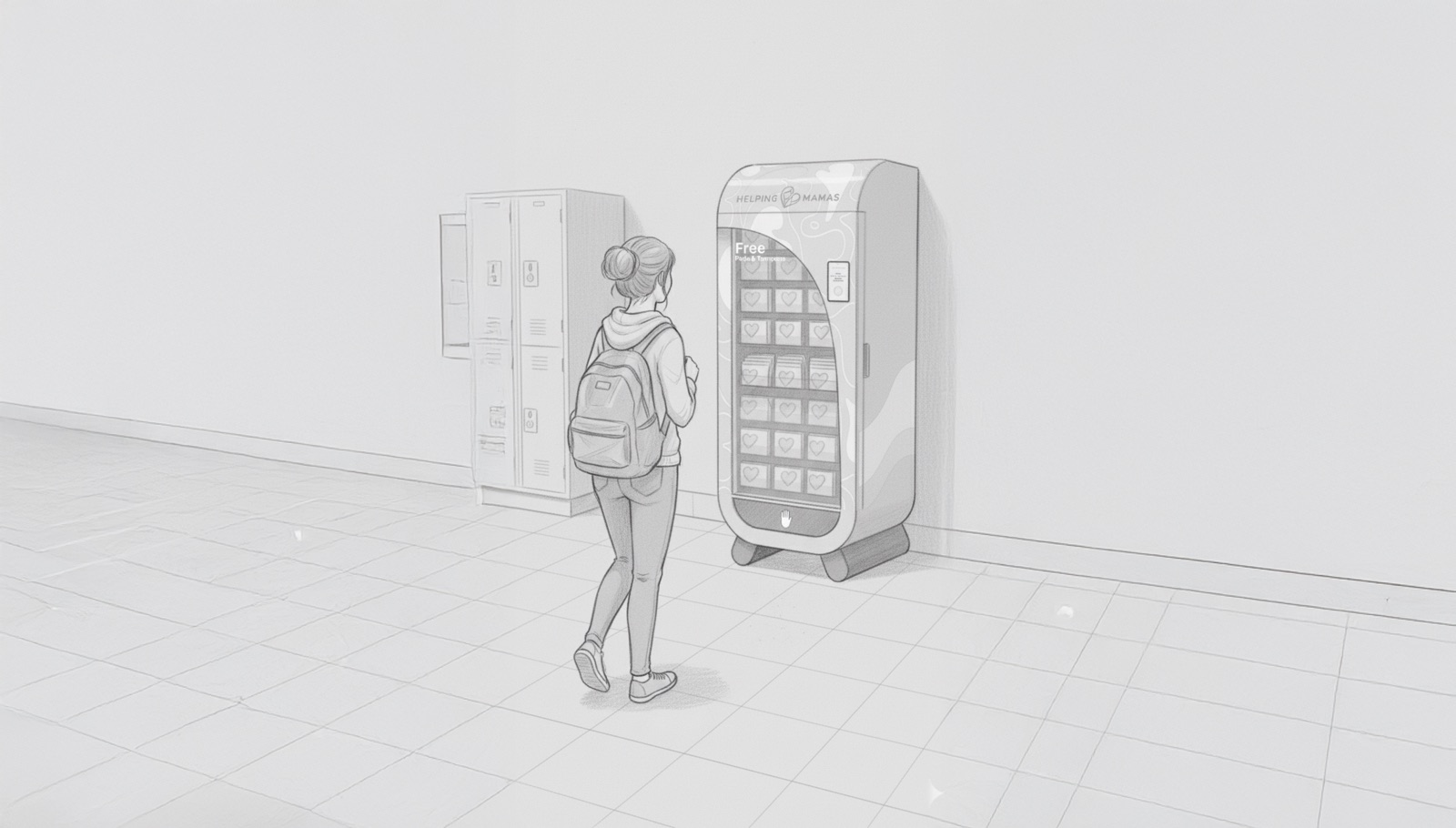 01
01An approachable presence that normalizes access and invites her in with warmth, not stigma.
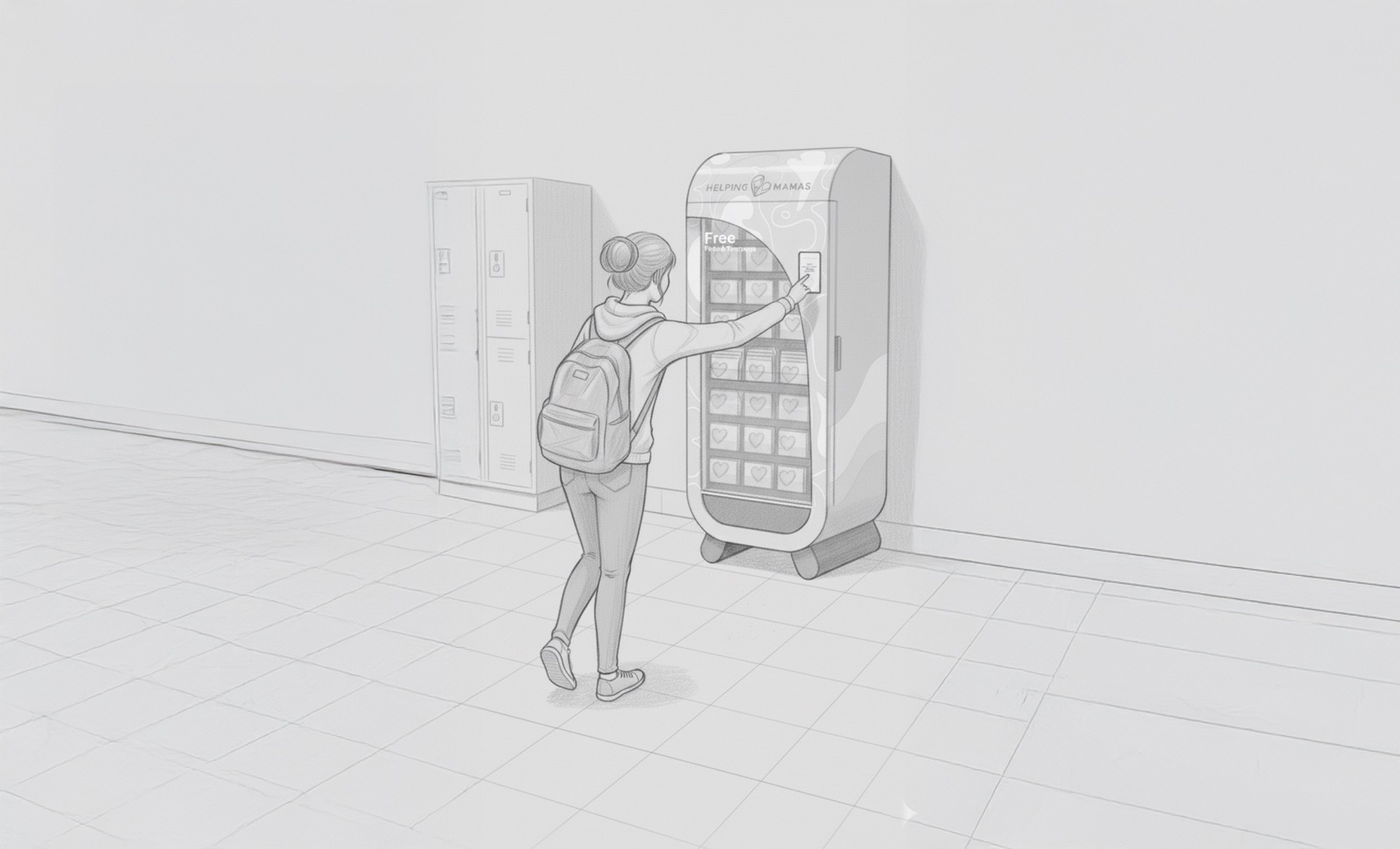 02
02Clear visuals and simple language on the screen make the kits easy to understand.
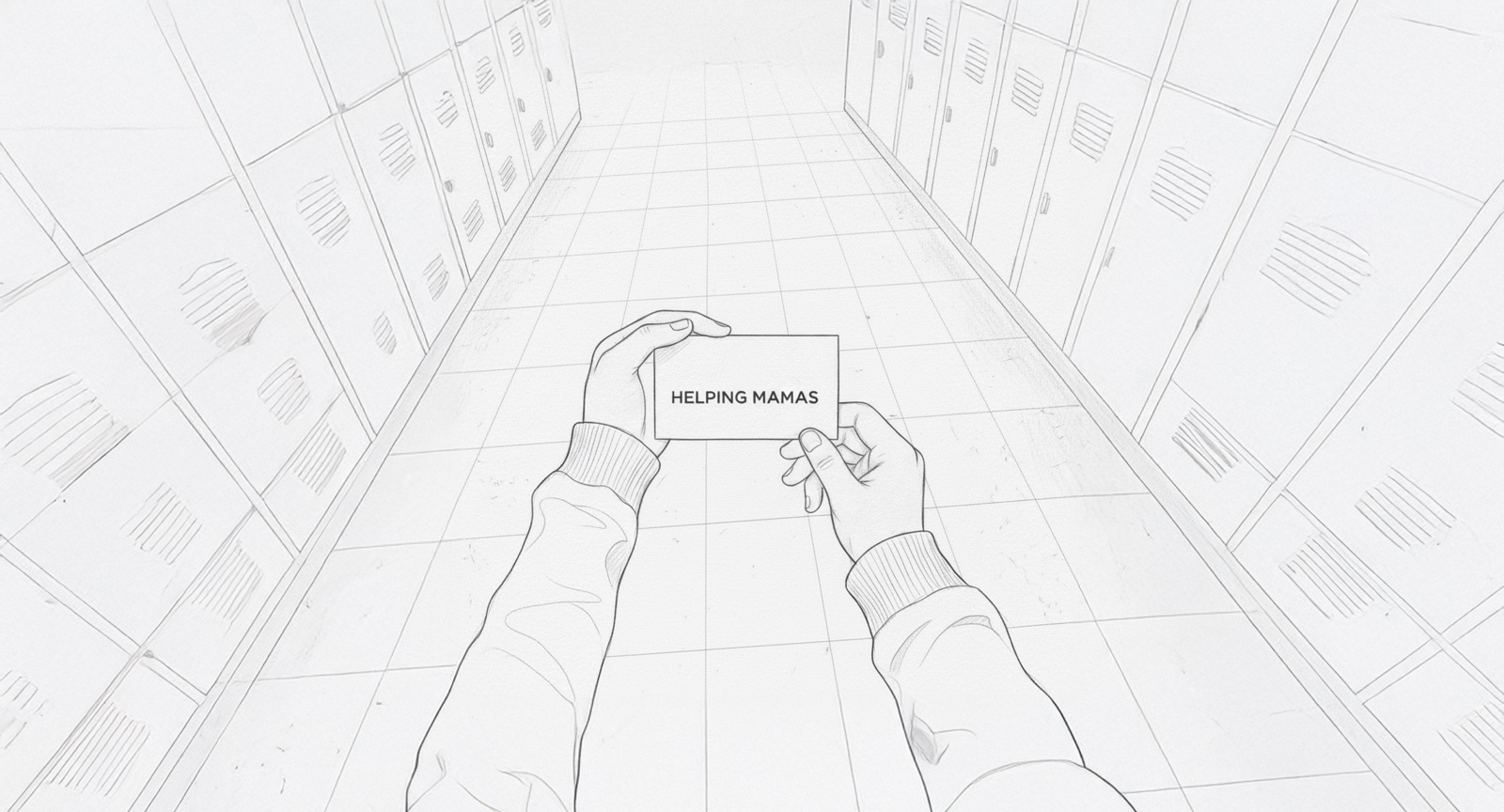 03
03One tap of her card redeems her monthly access. Simple, dignified, free from dependence.
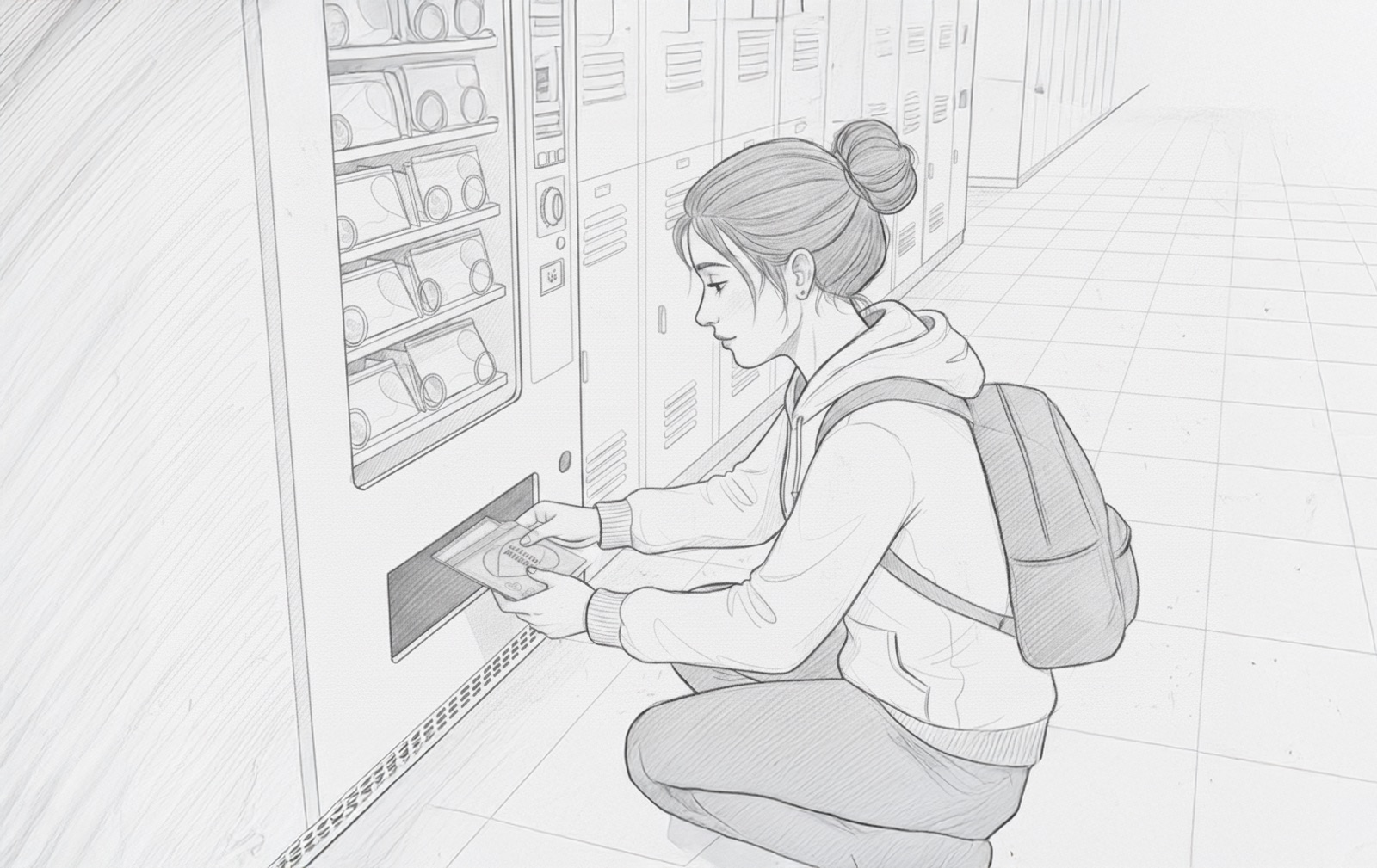 04
04Her chosen kit is dispensed instantly, packed for ease and comfort.
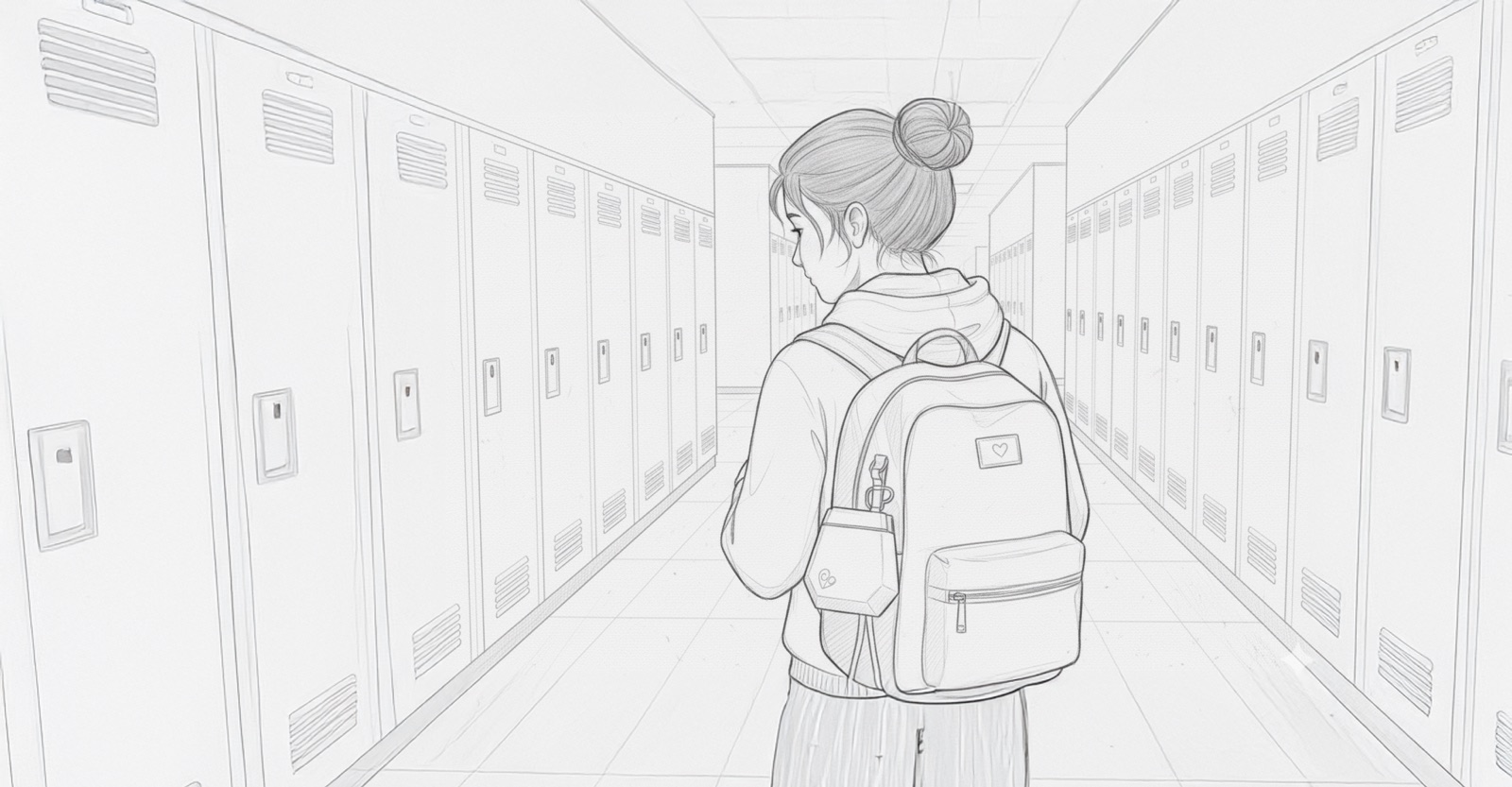 05
05Discreet packaging fits her routine. She carries away confidence, not just a product.
Storyboard illustrations are AI generated.
06 · The Machines
Through testing, feedback and iteration, one system embodied everything Helping Mamas stood for: a wall unit for small spaces and three standalone sizes that scale with demand.
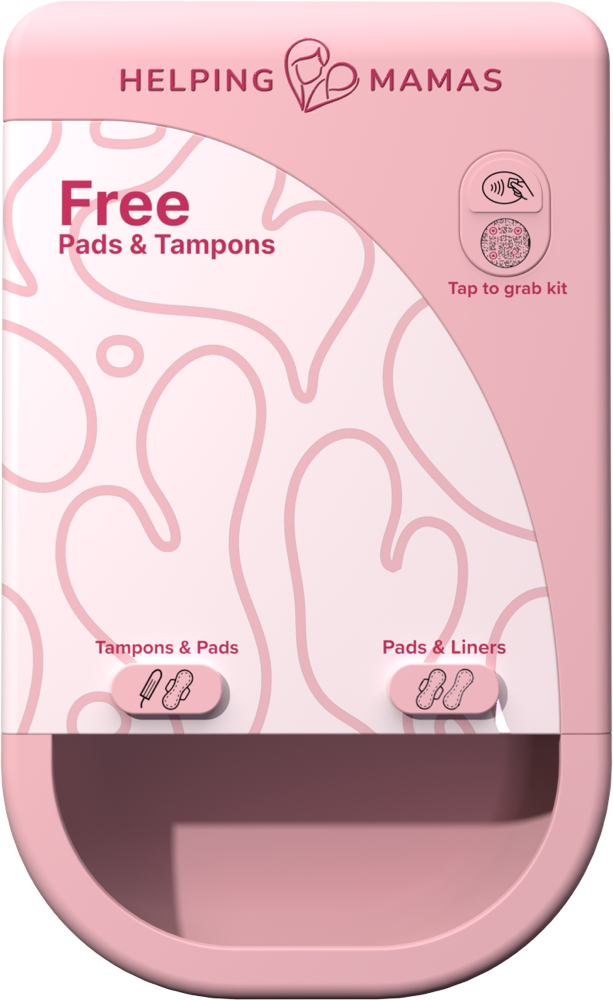
Wall mounted
One button for each of the two Helping Mamas kits.
Tap or swipe the Helping Mamas card to redeem free products.
A rounded, open compartment for easy, hygienic collection.
A small side door lets staff restock quickly.
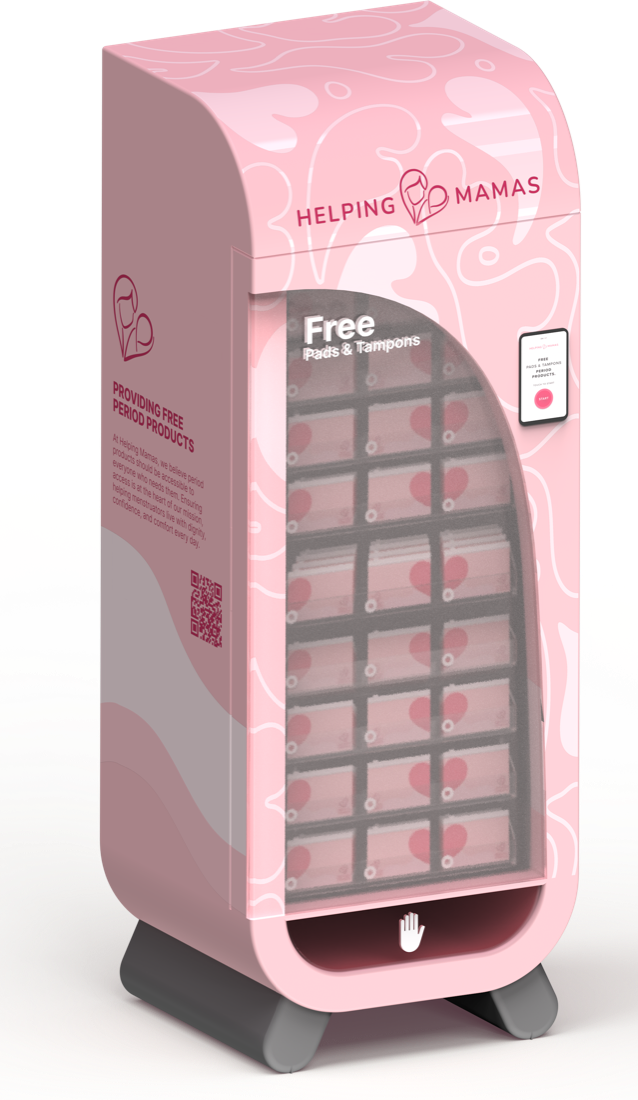
Standalone
A small touch screen for kit selection, refill alerts and gentle awareness messages.
A see-through front shows the kits inside, building trust and transparency.
The hand icon signals where to pick up.
A discreet side door for quick, hygienic refills.
07 · Packaging & Card
What someone carries out of the bathroom matters as much as the machine. The packaging and the card were designed to be discreet, durable and personal.
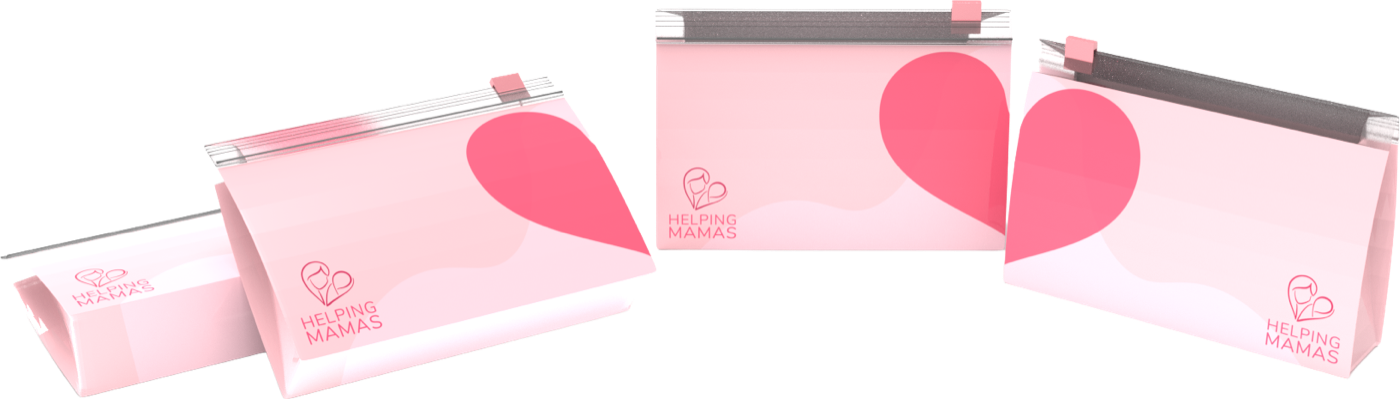
Primary packaging · Evoseal
Vacuum sealing keeps every kit hygienic and small. The pack is moisture-resistant and wipe-clean, and sits securely on sinks and ledges.
Secondary packaging · Evia
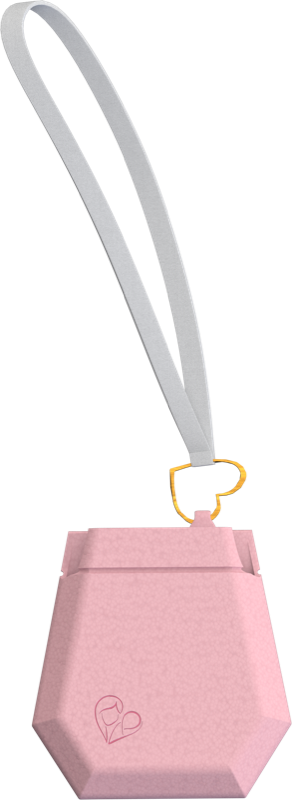
A foldable pouch to discreetly carry 2–4 pads, in synthetic leather with a soft fabric interior and a slot for the Helping Mamas card. Clip it to a bag or carry it on its own.
The Helping Mamas card
The campaign
08 · Impact & Learnings
Empowerment and confidence.
Improved attendance and inclusivity.
Normalizing period conversations.
01
The challenge
This was my first time as a Project Manager: leading a team, making decisions and delegating without formal leadership experience.
What I learned
How to establish clarity, build trust and lead through alignment rather than control.
02
The challenge
Running research, design and system development at once made timelines, dependencies and alignment hard to keep in sync.
What I learned
To prioritize communication, set clear checkpoints and adapt plans as constraints changed.
03
The challenge
Turning a sensitive mission around menstrual dignity into practical, scalable decisions was emotionally and strategically complex.
What I learned
To balance empathy with feasibility, so the solution stays respectful, maintainable and impactful.
Enabling women to embrace their periods as moments of dignity and strength, not sacrifice or shame